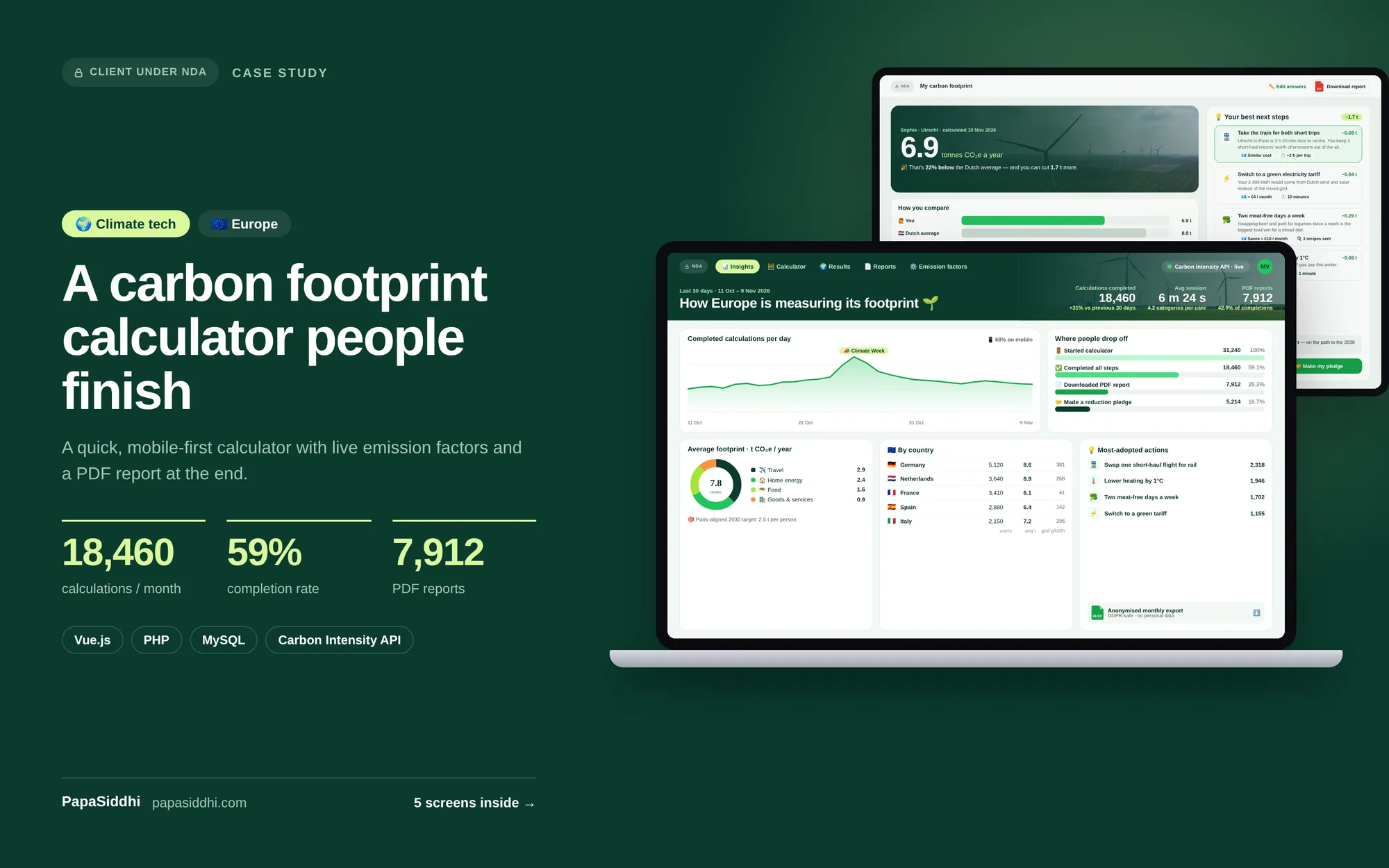
Sustainability
Carbon Footprint Calculator Tool for Sustainability, Europe
Helped thousands of users understand and reduce their carbon footprint.
Vue.jsPHPMySQL
Europe·Web ToolView Study →
A scalable carbon accounting SaaS platform designed to help enterprises measure, track, and optimize their emissions with real-time analytics, reporting dashboards, and compliance-ready sustainability insights.
Enabled enterprises to track emissions more efficiently, improved reporting accuracy by 70%, and enhanced sustainability decision-making.
Project Highlights
Scalable Architecture
Built for growth — SaaS Platform designed to scale
Secure & Compliant
Enterprise-grade security and data protection standards
Measurable ROI
Manual spreadsheets → Intelligent SaaS platform
Europe Delivery
Delivered for a Europe-based Sustainability client
Tech Stack
Last updated:
Industry
Sustainability
Sector
ClimateTech
Region
Europe
Project Type
SaaS Platform
The client is a European ClimateTech venture building carbon accounting software for mid-sized and large enterprises. Its customers operate across several EU member states, often with complex supply chains, multiple sites and reporting obligations that are tightening every year under frameworks such as the Corporate Sustainability Reporting Directive (CSRD) and the wider ESG disclosure agenda.
For these enterprises, sustainability reporting has moved from a voluntary marketing exercise to a board-level compliance requirement. The client recognised that sustainability teams needed more than spreadsheets: they needed a dependable SaaS product that could ingest emissions data continuously, calculate footprints consistently and produce audit-friendly reports. Technology was therefore the product itself, not a supporting function, and the platform had to be robust enough to win enterprise trust.
This project was delivered under a Non-Disclosure Agreement. The client operates in the Sustainability sector (ClimateTech) and is based in Europe. More on IT services for European businesses.
Prospective customers were tracking Scope emissions in sprawling Excel workbooks maintained by a handful of analysts. Data arrived late from facilities, conversion factors were applied inconsistently, and every reporting cycle involved weeks of manual reconciliation. As enterprise data volumes grew, these spreadsheets became fragile, slow and almost impossible to audit, leaving organisations exposed when regulators or investors asked how a number had been derived.
On the technical side, the client needed a platform that could serve many organisations from a single deployment without any risk of one tenant seeing another's data. It also had to pull live emissions data from external carbon APIs, handle bursts of calculation load around reporting deadlines, and generate structured ESG reports that sustainability managers could hand to auditors with confidence. Building this as a monolith would have limited how quickly new modules and integrations could be added.
Manual spreadsheets
Intelligent SaaS platform
PapaSiddhi designed and delivered a multi-tenant carbon accounting SaaS platform on a scalable microservices backend written in Node.js, with MongoDB as the primary data store. Tenant isolation and role-based access control were built into the data model from day one, so analysts, sustainability leads and administrators each see only what their role permits within their own organisation. Separate services handle data ingestion, emissions calculation, reporting and user management, allowing each to scale independently.
The React front end delivers AI-driven emission dashboards that refresh with real-time data pulled through Carbon API integrations, giving users an up-to-date picture of emissions by site, activity and category. An automated ESG compliance report generator assembles structured outputs designed to support CSRD-style disclosure, while export-ready analytics let teams share charts and tables with boards and auditors. The responsive interface works equally well on desktop and tablet for site managers in the field. Delivery followed an iterative, sprint-based approach, with the client reviewing working increments regularly. This allowed reporting templates and dashboard views to be refined against real customer feedback before general release.
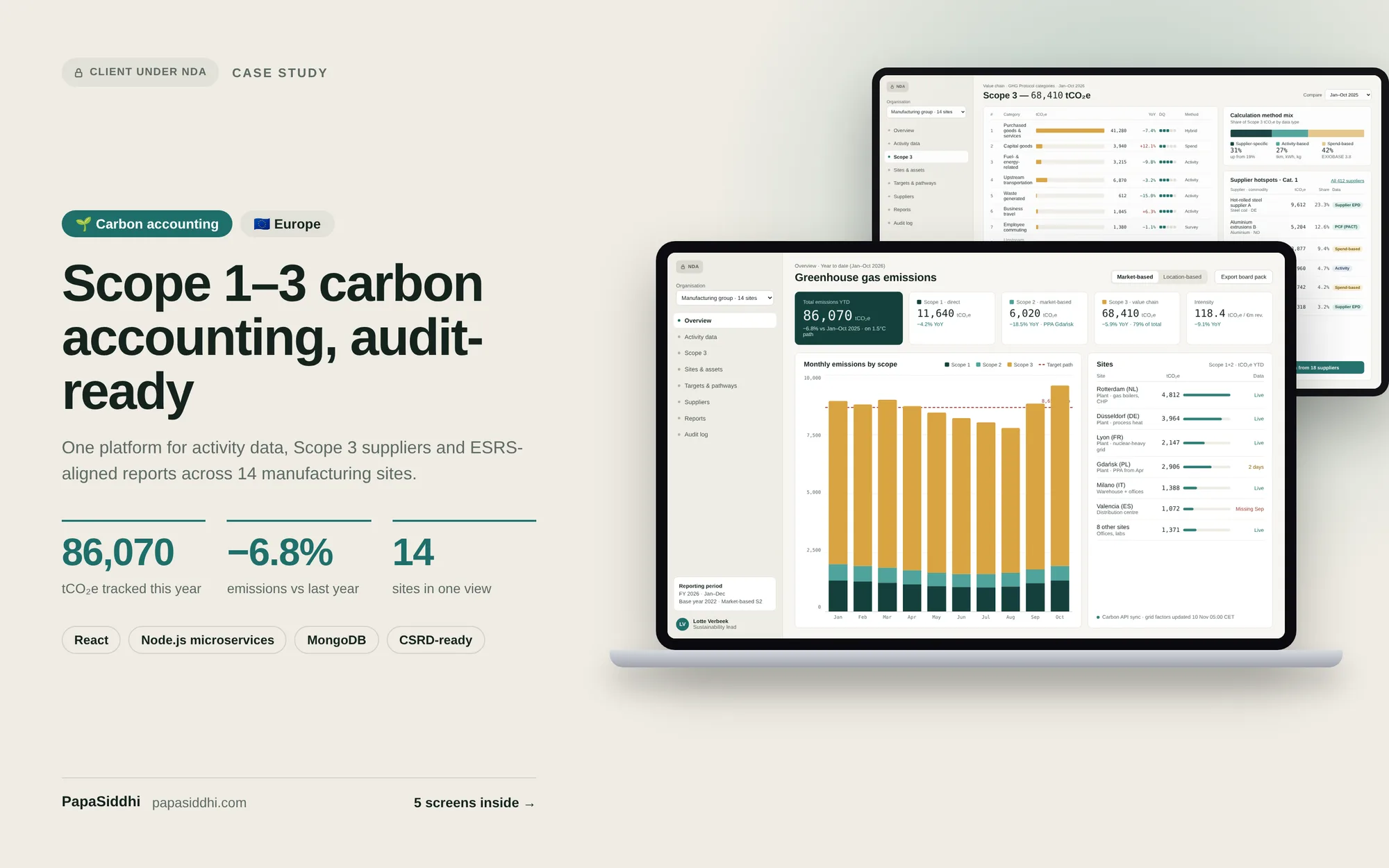
Enabled enterprises to track emissions more efficiently, improved reporting accuracy by 70%, and enhanced sustainability decision-making. Reduced manual data entry time by 85% and ensured full ESG compliance readiness.
Transformation Summary
Manual spreadsheets → Intelligent SaaS platform
This project was delivered under a Non-Disclosure Agreement (NDA). Specific client details, business data, proprietary workflows, and project credentials remain confidential. Screenshots and live URLs are available upon mutual NDA execution.
Request an NDA to see full detailsA carbon accounting platform at this scope — emissions tracking, analytics dashboards and compliance reporting — typically runs four to six months to a production-ready first release. We usually ship a working tracking and reporting core first so your sustainability team can start capturing real data while the analytics and multi-tenant layers are still being built.
Multi-tenant with role-based access means one codebase and one deployment serves every organisation, so updates to emission factors or reporting logic reach all tenants at once rather than needing 20 separate upgrades. It also keeps hosting cost per customer far lower, which matters when you are selling into mid-market sustainability teams with constrained budgets.
We keep emission factors and reporting templates as configurable data rather than hardcoded logic, so a standards change is a data update rather than a redevelopment cycle. The platform pulls live carbon data through external APIs where available, and we scope an ongoing support arrangement for the reporting templates that shift most often, such as CSRD-aligned outputs.
Yes — this was a core design requirement, since a reporting accuracy improvement is meaningless if an assurance provider cannot test it. Every calculated figure retains its input data, the factor applied and the timestamp, so a reported total can be decomposed back to the underlying entries during an audit.
For the initial discovery and a well-defined first release we generally work fixed-price so you have budget certainty for approval. Ongoing feature development after launch usually moves to a dedicated team or capped time-and-materials model, because product priorities shift once real customers are using the platform.
Let's discuss your project and create a success story together.
Sustainability
Helped thousands of users understand and reduce their carbon footprint.
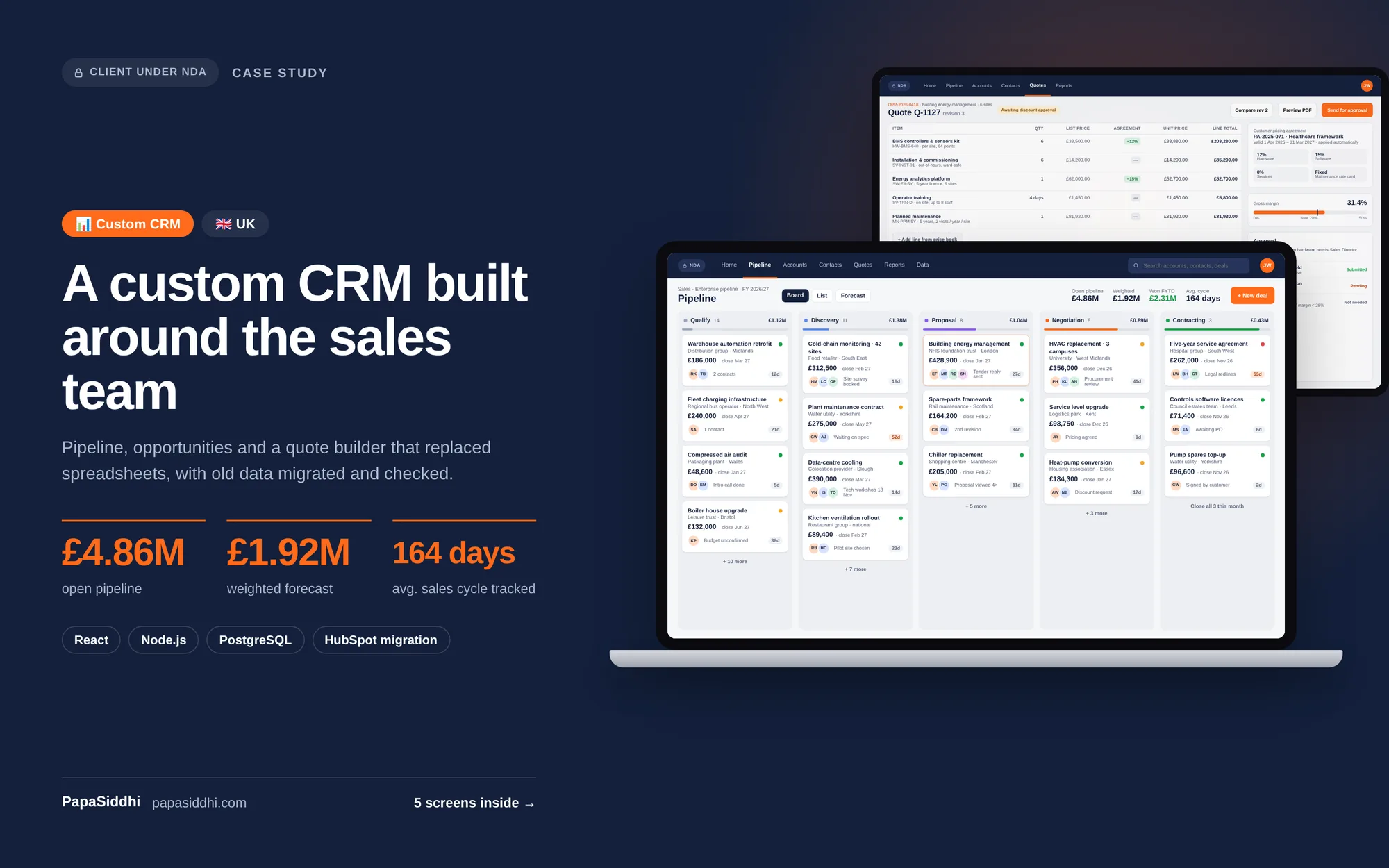
B2B Services
Delivered in approximately three months with a small dedicated team, including the migration.
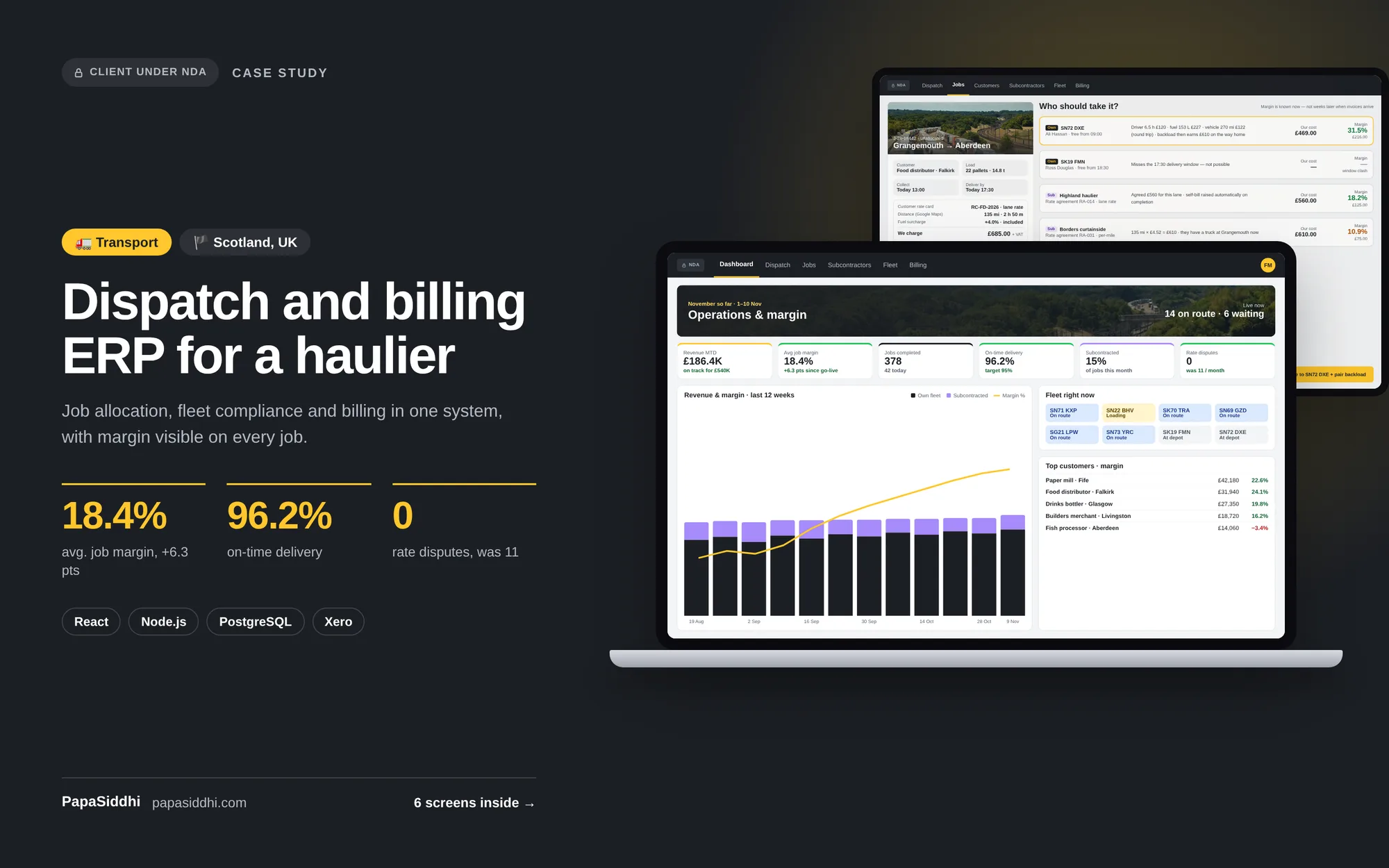
Transport
Delivered in approximately five months with a small dedicated team.