 USA
USA UK
UK AU
AU UAE
UAE India Dev Centre
When enterprises in the USA, UK, Netherlands, or UAE engage an IT outsourcing partner, one of the most consequential decisions is rarely the technology stack or even the vendor itself — it is the engagement model. Get this wrong, and even the most talented distributed team will struggle to deliver on time and within budget.
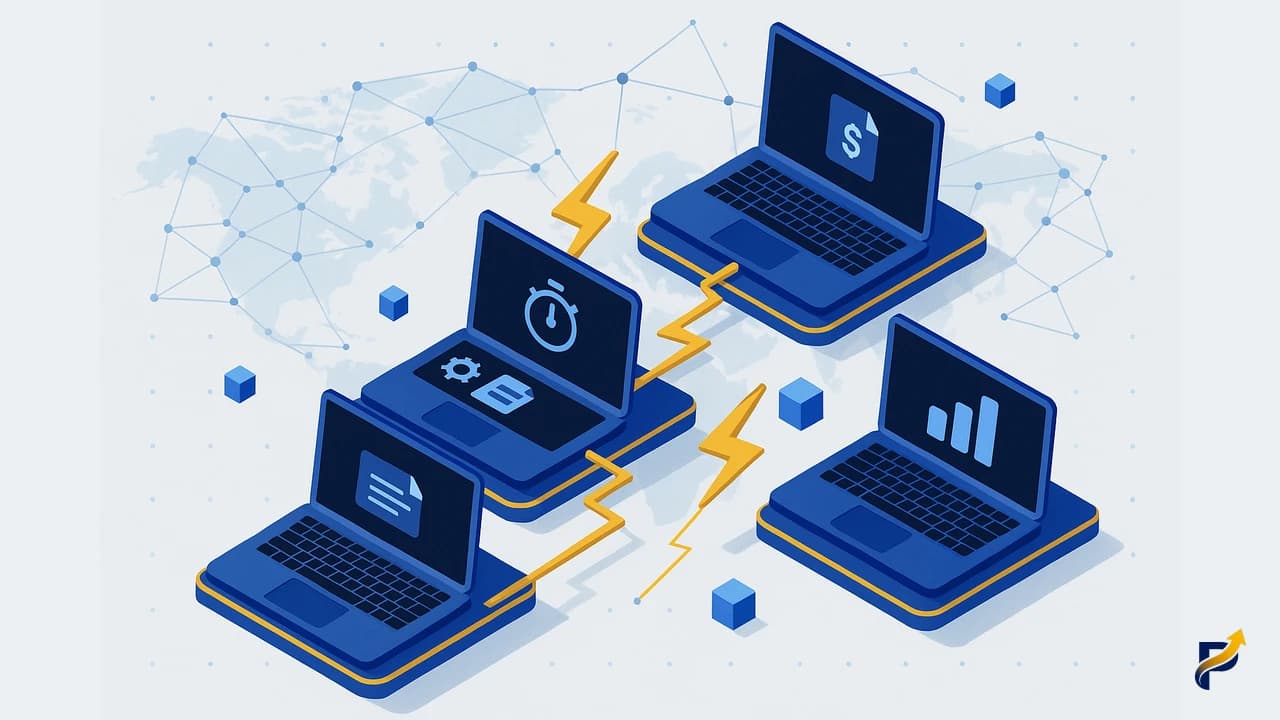
The debate around fixed price vs time and materials software development has sharpened significantly as digital transformation budgets tighten, AI integrations grow in complexity, and boards demand measurable ROI. Senior IT decision-makers are no longer asking if they should outsource — they are asking how to structure the relationship for maximum control, flexibility, and value.
This guide provides an authoritative, no-fluff breakdown of both models — when each works, when each fails, and how to pick the right one for your next project.
What Is the Fixed Price Model?
The fixed price model is a software development contract in which the client and vendor agree on a set scope, timeline, and cost before work begins. Regardless of the actual hours invested, the vendor delivers the agreed deliverables for the pre-negotiated price.
Core Characteristics
- ▸Scope is locked before development starts
- ▸Budget is predetermined — no billing surprises
- ▸Delivery timeline is contractually defined
- ▸Risk sits primarily with the vendor — overruns are their problem, not yours
- ▸Change requests incur additional cost through formal change order processes
What Is the Time & Materials Model?
The time and materials (T&M) model bills clients based on actual hours worked and resources consumed. There is no fixed price ceiling. Instead, you pay for the team's time at agreed hourly or daily rates, plus any direct costs such as infrastructure or third-party licences.
Core Characteristics
- ▸Scope can evolve throughout the project
- ▸You pay for actual effort — not a padded estimate
- ▸High flexibility to pivot priorities sprint by sprint
- ▸Transparency — detailed time logs and burn-rate reporting
- ▸Risk is more shared — budget overruns are possible if scope grows unchecked
- ▸Suits agile and iterative development paradigms naturally
Key Differences at a Glance
| Factor | Fixed Price | Time & Materials |
|---|---|---|
| Budget Certainty | High | Variable |
| Scope Flexibility | Low | High |
| Risk Owner | Vendor | Shared |
| Best For | Well-defined projects | Evolving or complex projects |
| Change Management | Formal change orders | Continuous adaptation |
| Transparency | Limited mid-project | High — ongoing visibility |
| Typical Duration | Short to medium | Medium to long-term |
| Vendor Padding | Common (buffer built in) | Minimal — pay for actuals |
| Client Involvement | Lower | Higher |
When Fixed Price Works Best
The fixed price model is not obsolete — it is simply context-dependent. It delivers genuine value in specific scenarios:
1. Requirements Are Fully Defined and Stable
If your business analysts have produced comprehensive functional specifications, wireframes, and acceptance criteria before vendor engagement, a fixed price contract rewards that rigour. Examples include a straightforward e-commerce portal, a compliance reporting module, or a migration from one ERP system to another with known data structures.2. Short Project Duration (Under 3 Months)
The shorter the engagement, the lower the probability that requirements will drift. Fixed price projects under 12 weeks are the sweet spot where scope rarely unravels.3. Budget Approval Is Non-Negotiable
Public sector organisations, regulated enterprises, and companies with rigid CAPEX approval processes often *require* fixed budgets for procurement sign-off. Fixed price gives finance and procurement teams the certainty they need.4. Low Technical Complexity
CRUD-heavy internal tools, landing pages, or straightforward API integrations are candidates. The more novel or technically uncertain the project, the less suitable fixed price becomes.**Watch out:** Vendors quoting fixed price for complex, first-of-kind projects are often padding estimates by 30–50% to absorb risk. You pay for certainty — whether or not that risk materialises.
When Time & Materials Works Best
For the majority of enterprise IT outsourcing engagements in 2025, T&M is not just acceptable — it is often the strategically superior choice.
1. Agile and Iterative Product Development
If your team is working in sprints, reprioritising backlog items, and incorporating user feedback into every release cycle, a fixed price contract will generate constant friction through change orders. T&M is built for agile.2. Complex or Emerging Technology Projects
Building an [AI/ML solution](/services/ai-ml-development), a custom ERP extension, or a large-scale cloud migration involves inherent unknowns. No vendor can honestly price these with precision at discovery. T&M lets the actual complexity — not an estimate of it — drive cost.3. Long-Running Product Partnerships
Organisations that treat their outsourcing partner as an extension of their internal engineering team — common in product companies across Denmark, Netherlands, and Australia — naturally gravitate to T&M. The relationship evolves; the contract should, too.4. When Speed to Market Matters More Than Cost Certainty
In competitive sectors, the cost of delayed delivery often exceeds the cost of a few extra development hours. T&M removes the bureaucratic overhead of change request negotiations so teams can move at pace.5. When You Need to [Hire Dedicated Developers](/hire-developers)
Dedicated team arrangements — where named developers are embedded into your workflow — are almost universally structured on a T&M basis. You buy their capacity; output is a function of your direction.Hidden Risks Decision-Makers Often Miss
Risks in Fixed Price Contracts
Scope Creep Through Ambiguity: Contracts are only as good as the specifications underpinning them. Vague requirements lead to disputed deliverables. Vendors often interpret ambiguity in the way that minimises their effort.
Quality Trade-offs Under Pressure: When a vendor faces cost overruns internally, the temptation is to cut corners on testing, documentation, or security reviews to protect margin. You get delivery on time — but technical debt accumulates.
Innovation Is Stifled: Fixed price contracts incentivise vendors to deliver exactly what was agreed — nothing more. Proactive improvement suggestions or smarter architectural approaches are disincentivised if they add hours without adding revenue.
Risks in Time & Materials Contracts
Budget Overruns Without Strong Governance: Without robust sprint reviews, burn-rate reporting, and stakeholder oversight, T&M engagements can drift. Governance is not optional.
Dependency on Vendor Honesty: Accurate time logging is foundational. Always require time-tracking transparency through tools like Jira, Harvest, or Toggl — integrated with your project dashboards.
Scope Indiscipline on the Client Side: T&M's flexibility can become a liability if your internal stakeholders keep expanding the backlog without prioritisation discipline. A good product owner is as important as a good development team.
The Hybrid Model: Getting the Best of Both Worlds
Increasingly, sophisticated IT outsourcing engagements use a hybrid model — sometimes called the phased fixed/T&M approach:
- ▸Phase 1 – Discovery (Fixed Price): Scope definition, architecture design, and prototyping are completed for a fixed fee. This gives you a precise, costed specification before committing to full development.
- ▸Phase 2 – Development (T&M): With clear specifications in hand, development proceeds on T&M with sprint-based delivery, transparent billing, and flexibility to refine.
- ▸Phase 3 – Maintenance & Enhancement (T&M Retainer): Post-launch support and iterative improvements are managed through a monthly hours retainer.
How to Evaluate the Right Model for Your Project
Use this decision framework before entering vendor negotiations:
Step 1: Assess Requirement Stability
Score your requirement stability from 1 (highly unstable) to 5 (fully defined). If below 3, avoid fixed price.Step 2: Evaluate Project Duration
Under 3 months: Fixed price is viable. Over 6 months: T&M or hybrid strongly recommended.Step 3: Consider Your Internal Governance Capacity
T&M demands active client oversight. If your team lacks bandwidth for sprint reviews and backlog management, fixed price with clear milestones may be more manageable — but hire a dedicated PM.Step 4: Analyse Technology Risk
New technology, integrations with legacy systems, or AI/data science components carry inherent uncertainty. Fixed price vendors will price that uncertainty into their quote. T&M pays for actuals.Step 5: Calculate True Cost of Each Model
Do not compare fixed price quotes against T&M estimates at face value. Fixed price quotes routinely include 20–40% risk buffers. Request T&M estimates with effort breakdowns and compare them to fixed price on a like-for-like basis.Step 6: Review Vendor Track Record Under Each Model
Ask prospective vendors for case studies specific to the model you are considering. A vendor experienced in T&M governance will have detailed reporting dashboards, structured sprint ceremonies, and escalation processes ready to share. [Contact PapaSiddhi's team](/contact) to see our delivery evidence across both models.How PapaSiddhi Can Help
At PapaSiddhi Technologies, we work with IT decision-makers across the USA, UK, Netherlands, Denmark, UAE, and Australia to design outsourcing engagements that match the genuine nature of each project — not just whatever is easiest to sell.
Our IT outsourcing services are structured to support all three models:
- ▸Fixed Price for well-scoped projects where your requirements are mature and budget approval is fixed
- ▸Time & Materials for agile product development, complex integrations, and long-term dedicated team partnerships
- ▸Hybrid Phased Engagements for enterprises that need discovery certainty before committing to full-scale development
We do not pad fixed price quotes with phantom risk buffers. We do not let T&M engagements drift without burn-rate visibility. We are a partner in the true sense — accountable to your outcomes, not just your contract.
Ready to structure your next IT outsourcing engagement the right way? Get in touch with our team today.
Frequently Asked Questions
Common questions about fixed price vs time and materials software development answered by the PapaSiddhi expert team.