 USA
USA UK
UK AU
AU UAE
UAE India Dev Centre
For startups operating in hyper-competitive markets across the USA, UK, Netherlands, Denmark, UAE, and Australia, velocity is everything. The ability to ship a working product before your runway narrows — and before a better-funded competitor occupies the space — often hinges on a single decision: who builds it, and how fast can they start?
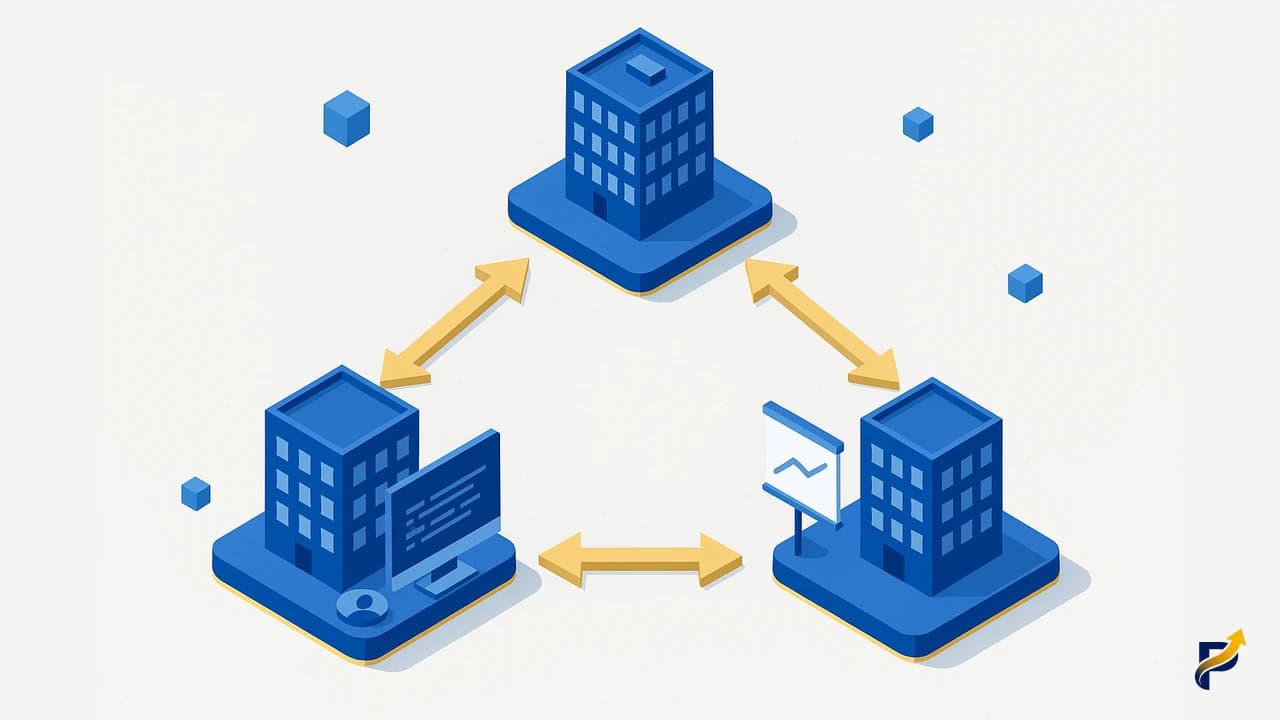
Hiring a dedicated development team is increasingly the answer senior IT decision-makers are turning to. Rather than enduring months-long local recruitment cycles, equity dilution from early technical hires, or the unpredictability of freelance marketplaces, a structured dedicated team model offers the speed, continuity, and technical depth that modern startups need.
This guide breaks down everything you need to know — from understanding the model itself to vetting partners, structuring contracts, and managing distributed teams effectively.
What Is a Dedicated Development Team?
A dedicated development team is a group of software engineers, QA specialists, UI/UX designers, and technical leads who work exclusively on your project under your strategic direction — but are employed and managed administratively by an outsourcing partner.
Unlike staff augmentation (where individual contractors plug into your existing team) or project-based outsourcing (where a vendor delivers a fixed scope), the dedicated model sits in a distinct middle ground. You get full team continuity, deep product context, and direct communication, while your outsourcing partner handles HR, infrastructure, compliance, and retention.
For startups, this distinction matters enormously. A team that ships features for your product month after month accumulates institutional knowledge — about your users, your edge cases, your architectural decisions — that a rotating cast of freelancers never will.
Why Startups Are Choosing the Dedicated Team Model
The numbers tell a clear story. According to Statista's 2025 IT outsourcing report, the global IT outsourcing market is projected to reach $812 billion by 2029, with SMEs and startups representing a growing share of demand — driven largely by the dedicated team engagement model.
Here is why startup founders and CTOs are making the shift:
1. Speed to hire. Recruiting a senior full-stack developer locally in London, Amsterdam, or San Francisco can take 3–5 months. A reputable outsourcing partner can assemble and onboard a screened team in 2–4 weeks.
2. Cost efficiency without quality compromise. Hiring remote developers through an established partner in a talent-rich region can reduce engineering costs by 40–60% compared to equivalent in-house hires in Western markets — without sacrificing seniority or technical quality — a range consistent with the Deloitte Global Outsourcing Survey.
3. Access to specialised skills. Whether you need React Native developers, AI/ML engineers, or ERP specialists, a dedicated team model lets you tap skills that are prohibitively scarce locally; McKinsey’s State of AI research documents how demand for AI and data engineering talent continues to outstrip local supply. Explore our AI/ML development services to understand what's possible.
4. Scalability. A startup moving from MVP to product-market fit may need to scale from 3 engineers to 12 within six months. The dedicated model allows rapid scaling up — and down — without the legal and financial complexity of mass hiring or layoffs.
5. Focus. Founders can stay in their lane. With a dedicated team handling execution, technical co-founders and product managers can focus on strategy, fundraising, and customer development.
When Is the Right Time to Hire a Dedicated Team?
Not every stage calls for a dedicated team. Recognising the right inflection point is critical.
Pre-MVP / Discovery Phase: If you are still validating your core hypothesis, a small project-based engagement or 1–2 augmented developers may suffice.
Post-Validation / MVP Build: This is the sweet spot. You have validated demand, secured initial funding, and need to build quickly and iteratively. A dedicated team of 4–8 developers is ideal here.
Post-PMF / Scaling Phase: Once you are scaling, the dedicated model becomes even more valuable. You need consistent delivery velocity, robust QA, and engineers who understand your product deeply enough to make autonomous technical decisions.
Signs you are ready:
- ▸You have a defined product roadmap for the next 6–12 months
- ▸You cannot afford the time or cost of local senior hiring
- ▸You have had poor experiences with freelance inconsistency
- ▸You need specialised capabilities (e.g., cloud architecture, ERP integration) that don't exist in your current team
How to Define Your Team Structure and Tech Stack
Before you approach any outsourcing partner, invest time in defining what you actually need. Vague briefs produce mismatched teams.
Step 1: Map your product roadmap to engineering disciplines. Break down your 12-month roadmap into frontend, backend, mobile, DevOps, QA, and data engineering requirements.
Step 2: Define seniority levels. A common mistake is hiring all senior engineers for cost reasons or all mid-level engineers for budget reasons. A balanced team — typically 1 tech lead, 2–3 senior developers, 2–3 mid-level developers, and 1 QA engineer — delivers the best output-to-cost ratio.
Step 3: Lock your core tech stack. Avoid changing your stack during the hiring process. If you are building a SaaS platform on Node.js, React, and AWS, specify this explicitly. If your stack is undecided, get a technical consultation first.
Step 4: Decide on adjacencies. Do you need UI/UX design capacity? Business intelligence? ERP integration? If your product roadmap involves enterprise workflow automation or ERP modules, explore how Business Central services can complement your development team.
How to Evaluate and Vet Remote Development Partners
The outsourcing market is crowded. Due diligence here directly determines your project outcomes.
Portfolio and domain experience. Look for partners who have shipped products in your domain — whether that is fintech, healthtech, SaaS, or e-commerce. Case studies with measurable outcomes (not just screenshots) are the gold standard.
Talent acquisition and retention processes. Ask how they recruit, how they assess technical skills, and what their annual engineer attrition rate is. High attrition in a dedicated team is catastrophic for product continuity.
Communication and project governance. Request information on how they run sprints, handle escalations, and report progress. Partners who operate on Agile/Scrum with transparent tooling (Jira, Confluence, Slack) are far preferable to opaque execution shops.
Time zone compatibility. Overlap of at least 4 working hours per day with your core team is a practical minimum for effective collaboration. If you are based in London or Amsterdam and your team is in India, an extended-hours arrangement or staggered shifts may be necessary.
References. Always speak to at least two existing clients before signing. Ask specifically about responsiveness during crisis situations, not just standard delivery.
Security and compliance posture. Verify ISO 27001 certification, GDPR compliance posture, and NDA practices. For startups handling sensitive user data, this is non-negotiable.
For a full overview of what a structured engagement looks like, visit our IT outsourcing services page.
Engagement Models: What to Know Before You Sign
When you hire a dedicated development team, you will typically encounter three contractual structures:
Time & Materials (T&M): You pay for actual hours worked. This offers maximum flexibility but requires disciplined scope management. Best suited for startups with evolving requirements.
Dedicated Team Retainer: A fixed monthly fee for a defined team composition. Predictable costs, high continuity. This is the most common model for startups post-Series A.
Hybrid Model: A fixed scope for foundational milestones, T&M for ongoing iteration. Balances predictability with flexibility.
Key contract provisions to negotiate:
- ▸IP assignment (ensure all IP transfers to your company upon payment)
- ▸Notice periods for team scaling or termination (30–60 days is standard)
- ▸Service Level Agreements (SLAs) for critical bug fixes and response times
- ▸Data handling and confidentiality provisions
- ▸Dispute resolution jurisdiction
Gartner’s remote work and talent research shows that the engagement structure you choose materially affects distributed-team performance. The comparison below summarises the four models most startups evaluate:
| Engagement Model | Best For | Typical Team Size | Time to Start |
|---|---|---|---|
| Dedicated Team | Long-term product development | 3–15 developers | 48–72 hours |
| Project-based | Fixed scope / MVP builds | 2–8 developers | 1–2 weeks |
| Staff Augmentation | Skill gap or capacity boost | 1–5 developers | 24–48 hours |
| Managed Services | Ongoing support & maintenance | 2–6 engineers | 1 week |
Onboarding and Managing a Remote Dedicated Team
Hiring the right team is half the battle. Integrating them effectively is the other half.
Week 1 — Context immersion: Share your product vision, business model, user personas, and existing codebase documentation. The more context your dedicated team has, the better their technical decisions will be.
Week 2–3 — Process alignment: Establish sprint cadences, stand-up schedules, code review practices, and deployment pipelines. Agree on communication norms — response time expectations, escalation paths, and meeting rhythms.
Month 1 — Trust building: Assign a meaningful but bounded first sprint. Evaluate output quality, communication clarity, and proactiveness. Address issues early before they become cultural patterns.
Ongoing — Treat them as your team. The biggest predictor of long-term dedicated team success is how the client treats the team. Including remote developers in product discussions, celebrating wins, and providing direct constructive feedback dramatically improves retention and output quality.
Common Mistakes Startups Make When Hiring Remote Developers
Choosing on price alone. The cheapest dedicated team almost always costs more in the long run through rework, missed deadlines, and eventual re-engagement of a better partner.
Skipping technical interviews. Always interview the specific developers who will work on your project, not just the sales team. Insist on a technical assessment or paid trial sprint.
Under-investing in documentation. Remote teams cannot absorb context informally the way co-located teams can. Invest in detailed product specs, API documentation, and architecture decision records.
Neglecting time zone alignment. Asynchronous-first cultures can work beautifully, but only when deliberately designed. Do not assume overlap will sort itself out.
Failing to assign a clear internal owner. Every dedicated remote team needs a product owner or technical liaison on the client side. Without one, the team loses direction and velocity.
To avoid these pitfalls and start your hiring process with confidence, visit our hire developers page for a structured engagement process.
How PapaSiddhi Can Help
At PapaSiddhi Technologies, we have spent years helping startups across the USA, UK, Netherlands, Denmark, UAE, and Australia build and scale dedicated development teams that ship real products — not just prototypes.
Here is what makes our model different:
- ▸Pre-vetted talent: Every developer in our network passes a rigorous multi-stage technical and communication assessment. You interview the actual engineers before they join your team.
- ▸Flexible team composition: From a single senior developer to a full cross-functional squad of 15, we assemble teams matched precisely to your roadmap.
- ▸Full-stack capability: Our teams cover web and mobile development, cloud architecture, AI/ML engineering, ERP integration, QA automation, and DevOps — enabling true end-to-end product delivery.
- ▸Transparent governance: We operate on Agile/Scrum with full visibility into sprint progress, velocity metrics, and risk flags — no black boxes.
- ▸Time zone flexibility: We offer extended-hour arrangements to ensure meaningful daily overlap with your team wherever you are based.
- ▸Dedicated account management: A senior engagement manager sits between you and your team, ensuring strategic alignment and resolving friction before it becomes disruption.
Get in touch with our team today to discuss your requirements and receive a tailored team proposal within 48 hours.
Frequently Asked Questions
Common questions about hire dedicated development team startup answered by the PapaSiddhi expert team.