 USA
USA UK
UK AU
AU UAE
UAE India Dev Centre
Why European Companies Are Doubling Down on India in 2026
India has been a software development destination for decades, but 2026 marks a qualitative shift. Netherlands and Danish companies — known for demanding quality, GDPR compliance, and cultural alignment — are increasingly choosing India not as a cost-cutting measure, but as a strategic talent-acquisition strategy.
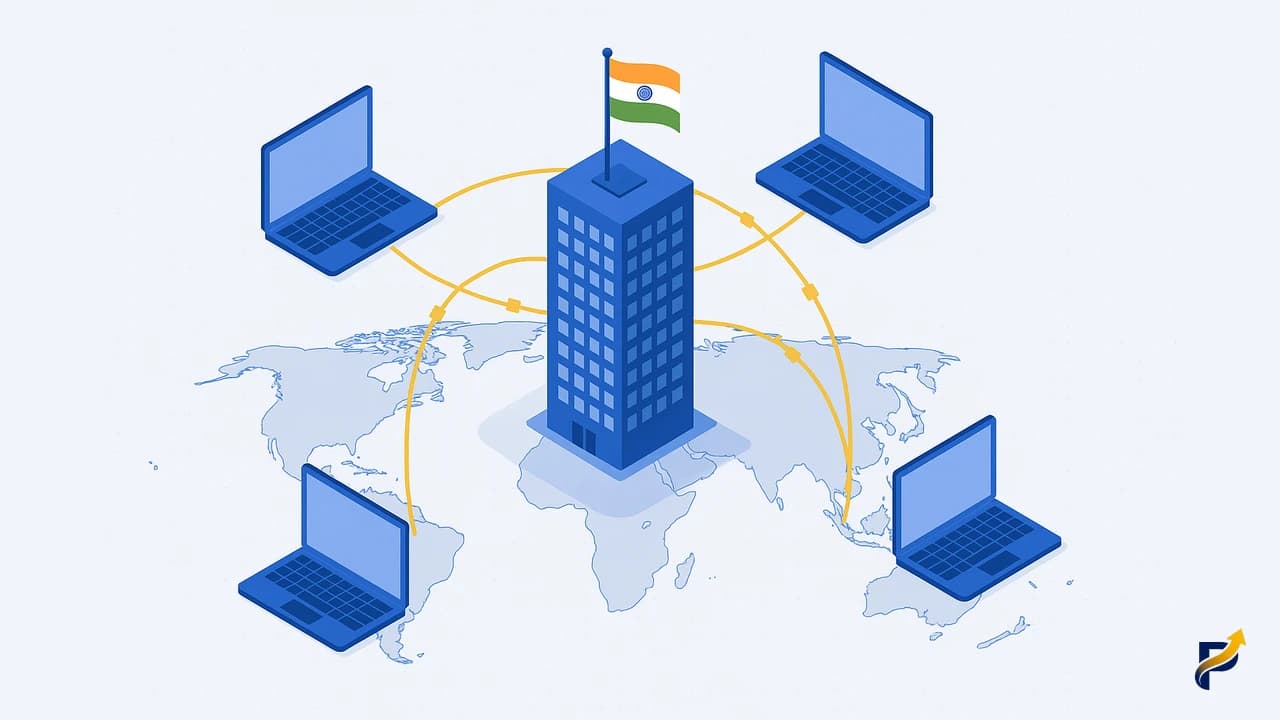
The driver is structural: a persistent European technology skills gap. The Netherlands is projected to face a shortage of more than 250,000 skilled workers, with IT remaining one of the most acute shortage sectors even as the broader labour market cooled in late 2025 (per Statistics Netherlands / CBS). In Denmark, the talent gap is equally pressing: the country is projected to fall short of roughly 19,000 IT professionals by 2030, and Danish industry reporting shows that a significant share of companies have had to abandon IT hires or postpone projects for lack of qualified applicants (Grid Dynamics — Nordic tech talent shortage).
India provides the only answer at this scale. According to GitHub's Octoverse 2025 report, India now has more than 17 million developers on the platform and has overtaken the United States to become the world's largest base of open-source contributors — adding 5.2 million developers in 2025 alone, and projected to reach 57.5 million by 2030.
At PapaSiddhi Technologies in Udaipur, India, we have spent 10+ years building dedicated remote teams for European clients. This guide covers everything Netherlands and Danish decision-makers need to know about IT outsourcing to India in 2026 — cost analysis, legal frameworks, cultural alignment, and how to avoid the mistakes that cause outsourcing relationships to fail.
The Cost Advantage — 2026 Market Rates
The salary differential between Indian and European developers remains the primary driver of outsourcing decisions, but the gap is more nuanced than "cheap labour." Indian developers are competitively paid within their local market — the cost advantage comes from differences in cost of living, currency valuations, and social security structures.
Mid-Level Full Stack Developer (5 years experience):
- ▸Netherlands (Amsterdam): €72,000–€92,000/year + 30% employer costs = €94,000–€120,000 all-in
- ▸Denmark (Copenhagen): DKK 480,000–600,000/year + 15% employer costs = DKK 552,000–690,000 all-in
- ▸India via PapaSiddhi: $42,000–$52,000/year (all-in engagement cost including management overhead)
- ▸Saving: ~55%–64% vs Netherlands, ~42%–52% vs Denmark (depending on seniority and stack)
Senior Microsoft Business Central Developer (8+ years experience):
- ▸Netherlands: €95,000–€130,000/year + costs = €124,000–€169,000 all-in
- ▸Denmark: DKK 650,000–850,000/year + costs = DKK 748,000–978,000 all-in
- ▸India via PapaSiddhi: $56,000–$68,000/year (all-in engagement cost)
- ▸Saving: ~57%–67% vs Netherlands, ~46%–56% vs Denmark (depending on seniority and project complexity)
Senior Data Scientist / Machine Learning Engineer:
- ▸Netherlands: €90,000–€120,000/year + costs = €117,000–€156,000 all-in
- ▸Denmark: DKK 620,000–800,000/year + costs = DKK 713,000–920,000 all-in
- ▸India via PapaSiddhi: $46,000–$58,000/year (all-in engagement cost)
- ▸Saving: ~60%–69% vs Netherlands, ~51%–61% vs Denmark (depending on specialisation and tools)
These figures use approximate 2026 exchange rates (EUR/INR ~93, DKK/INR ~12.5, USD/INR ~86; ~€1 = $1.08, ~1 DKK = $0.145). European salary ranges are consistent with 2026 market data from PayScale, Glassdoor, and Levels.fyi, where senior Dutch and Danish developers commonly reach €110,000–€180,000 in total cost of employment. The "total engagement cost" includes developer salary, management fee, infrastructure, HR support, and our operational overhead — there are no hidden costs.
Final engagement cost depends on specific requirements, seniority level, technology stack, and project complexity. Contact PapaSiddhi for a tailored quote.
The ROI calculation: A Netherlands SME hiring 5 senior Business Central developers locally would spend roughly €620,000–€845,000/year (≈$670,000–$914,000) in all-in costs. The same team via PapaSiddhi costs roughly $280,000–$340,000/year (5 × $56,000–$68,000) — saving between approximately $330,000 and $635,000 per year (≈€305,000–€585,000). For a business investing that saving into product development, marketing, or additional hiring, the compounding effect is transformative.
GDPR Compliance — The Non-Negotiable for European Clients
GDPR compliance is the most common concern we hear from Netherlands and Danish prospects. It is also the most misunderstood. Indian IT outsourcing engagements can be fully GDPR-compliant — the regulation applies to how and where personal data is processed and protected, not to where the processor is headquartered.
One point to be clear about: the European Commission has not issued an adequacy decision for India. Personal data transfers from the EU to India therefore rely on the "appropriate safeguards" route under Article 46 GDPR — in practice, Standard Contractual Clauses. A formal EU adequacy assessment of India is widely expected to begin in the 2026–2027 window, but until one is granted, SCCs remain the correct and standard legal basis. (For context, in early 2025 the European Data Protection Supervisor declined a specific transfer to India; the EDPS clarified on 19 May 2025 that this was a procedural decision, not a verdict on India's data-protection law.)
Standard Contractual Clauses (SCCs)
The legal mechanism for transferring personal data from the EU to India is Standard Contractual Clauses (SCCs) — the European Commission-approved 2021 contract modules that create binding data-protection obligations on the receiving party, supported by a transfer impact assessment.
For all European engagements, PapaSiddhi executes the EU Commission's 2021 SCC modules (Controller-to-Processor where we process EU personal data; Controller-to-Controller for analytics). Our legal template is reviewed annually by EU-qualified data-protection counsel.
Data Processing Agreement (DPA)
We provide a comprehensive Data Processing Agreement covering:
- ▸Article 28 GDPR processor obligations — purpose limitation, data minimisation, security measures
- ▸Sub-processor list with change-notification process
- ▸Data-breach notification within 24 hours (faster than the 72-hour GDPR requirement)
- ▸Data deletion/return procedures on contract termination
- ▸Right to audit — clients may audit our technical and organisational measures with 30 days' notice
Technical GDPR Measures
Technical controls our clients rely on:
- ▸All developer workstations use company-managed devices with full-disk encryption (BitLocker/FileVault)
- ▸Source code and data stored only in client-provisioned infrastructure (AWS/Azure/GCP in EU regions) — we do not retain copies on PapaSiddhi infrastructure
- ▸VPN required for all remote-work sessions; MFA enforced across all access
- ▸No personal-data access outside of client systems — we work within client-provided tools and repositories
- ▸Annual security-awareness training for all staff; ISO 27001 roadmap in progress
India's Data Protection Framework — DPDP Act 2023
India now has a dedicated statutory data-protection regime. The Digital Personal Data Protection (DPDP) Act 2023 is being operationalised through the Digital Personal Data Protection Rules, which were notified on 13 November 2025. Enforcement is phased: procedural provisions and the establishment of the Data Protection Board of India took effect from 14 November 2025; Consent Manager registration follows in November 2026; and the substantive compliance obligations — notice requirements, security safeguards, breach notification, and Data Principal rights — come into force on 14 May 2027 (see IAPP analysis). The Act establishes a consent-centric framework analogous to GDPR, with the Data Protection Board empowered to levy penalties up to ₹250 crore. The DPDP Act reinforces, rather than conflicts with, our GDPR obligations and strengthens the long-term case for India as a data-protection-mature outsourcing destination.
Timezone Overlap — CET/CEST and IST
Netherlands and Denmark operate on CET (UTC+1) in winter and CEST (UTC+2) in summer. India is on IST (UTC+5:30) year-round — no daylight saving time.
Winter (CET): Overlap window is 10:00–14:00 CET = 14:30–18:30 IST
Summer (CEST): Overlap window is 10:00–14:30 CEST = 13:30–18:00 IST
This is a genuine 4-hour daily overlap — enough for a morning standup, sprint planning, code reviews, and async handoff. Our standard working model for European clients:
- ▸09:00–10:00 IST: Team internal sync and task prioritisation
- ▸10:00–14:00 IST: Maximum European availability (standups, calls, reviews)
- ▸14:00–18:00 IST: Deep work / heads-down development (European afternoon)
- ▸18:00–19:00 IST: EOD summary, PR submission, async Slack/Teams updates for European next-morning
For mission-critical projects requiring extended overlap, we can staff developers who prefer evening shifts (14:00–23:00 IST), which covers 10:00–19:00 CEST — a full European working day.
Cultural Alignment — Why Netherlands and Denmark Work Well With India
European companies sometimes worry about cultural friction. In practice, Netherlands and Danish companies tend to have the smoothest outsourcing relationships of any European nationality we work with. Here is why.
Direct communication style: Both Dutch and Danish cultures are known for directness — blunt feedback, clear requirements, discomfort with ambiguity. This pairs well with Indian engineering culture, which responds better to explicit requirements and direct feedback than to vague directives and indirect hints. Unlike some outsourcing relationships where European clients hold back criticism, Dutch and Danish clients say exactly what they need.
Flat hierarchy expectations: Netherlands and Danish workplaces are famously flat. There are no rigid hierarchies. Developers are expected to push back, ask questions, and challenge requirements. Indian software engineers trained in Agile environments at tier-1 tech companies work the same way — we encourage our developers to flag requirement gaps, raise technical debt concerns, and propose alternative approaches.
English proficiency: All PapaSiddhi engineers hold IELTS 7.5+ equivalency or demonstrate native-level written English. Dutch and Danish professionals speak excellent English — meetings are conducted entirely in English with no language barrier.
Quality expectations: Dutch and Danish clients have zero tolerance for cutting corners. This matches our engineering culture. We run CI/CD pipelines, mandatory code reviews (minimum 2 approvers for production merges), and automated test coverage requirements on all client projects.
Services Most Commonly Outsourced by Netherlands and Danish Companies
Based on our 60+ European client engagements, the most commonly outsourced functions are:
1. Microsoft Business Central ERP Development
The Netherlands is one of the highest Microsoft BC adoption markets in Europe. Danish manufacturing and distribution companies are migrating from Dynamics NAV to BC in large numbers. Indian BC developers with Dutch/Danish NAV/BC experience are among the most valuable resources in the market. Our BC team has implemented BC for 15+ European clients across retail, manufacturing, and professional services.
2. Custom Software Development (React, Next.js, Node.js)
Building proprietary internal tools, customer portals, and SaaS products is the second most common use case. Netherlands tech startups in particular use Indian teams to extend their runway — hiring 5 Indian engineers instead of 2 Dutch engineers for the same budget.
3. SharePoint and Power Platform
Dutch and Danish enterprises are heavy Microsoft 365 users. SharePoint intranets, Power Apps forms, Power Automate workflows, and Power BI dashboards are consistently in demand. Our SharePoint team has 8 developers with 5+ years of SharePoint Online experience.
4. Data Engineering and Business Intelligence
With GDPR-compliant data pipelines being a board-level priority, Netherlands and Danish companies need data engineers who understand both the technical requirements and the regulatory constraints. Our data team builds on Azure Data Factory, Databricks, and Power BI.
5. Mobile App Development (Flutter, React Native)
Both Flutter and React Native apps for internal operations and B2C products. Retail clients, logistics companies, and field service operations across Netherlands and Denmark.
The Engagement Models — How Outsourcing Works in Practice
Dedicated Team Model (Most Popular)
A dedicated team is a group of developers who work exclusively for your company — they are not shared across clients. They join your standups, use your tools (Jira, Linear, Figma, Notion), report to your product manager, and are culturally integrated into your organisation.
How it works:
- ▸You interview and select each developer from a shortlist we provide
- ▸You have full control over task assignment, priorities, and sprint planning
- ▸We handle HR, payroll, leave management, device management, and operational support
- ▸You pay a fixed monthly rate per developer with no hidden costs
- ▸Minimum engagement: 3 months; typical relationship: 18+ months
This model suits companies building a long-term software capability without the overhead of local hiring. It is the right choice for scaling a product team or building a dedicated operations function.
Project-Based Engagement
A fixed-scope project with defined deliverables, timeline, and price. We take full ownership of delivery — you specify the requirements and acceptance criteria, we build and ship.
How it works:
- ▸Discovery sprint (1-2 weeks): requirements analysis, technical design, effort estimation
- ▸Fixed-price contract with milestone payments and change request process
- ▸Weekly demo calls with stakeholder sign-off at each milestone
- ▸90-day post-go-live support included
This model suits companies with well-defined one-time projects: ERP implementations, mobile app builds, portal migrations, data warehouse builds.
Staff Augmentation
Individual contractors placed within your existing team. You manage them directly; we handle employment compliance and payroll.
How it works:
- ▸You request a specific skill set and experience level
- ▸We provide 3 candidates within 72 hours; you interview and select
- ▸The developer joins your team full-time, managed by you
- ▸We handle employment, benefits, leave, and all HR administration
- ▸Notice period: 30 days for replacement or exit
This model suits companies with an existing development team that needs to scale fast — adding 2-3 specific skill sets without the time cost of local hiring, which routinely stretches to several months for in-demand IT roles in the Netherlands and Denmark.
Avoiding Common Outsourcing Mistakes
After 10+ years and 60+ European client relationships, these are the failure patterns we see most often:
Mistake 1: Under-specifying requirements
The most common reason outsourcing projects fail is requirement ambiguity — the client expected one thing, the developer built another. Fix: invest 1-2 weeks in a proper discovery sprint before development starts. Write acceptance criteria in plain language. Review wireframes before committing to code.
Mistake 2: Zero overlap standups
Some companies put all meetings at 17:00 CET to avoid any inconvenience to their local team — which is 21:30 IST, well outside normal working hours. Fix: schedule the daily standup within the 10:00-14:00 CET overlap window. 30 minutes a day is sufficient for a well-run standup.
Mistake 3: No local champion
Outsourcing works best when there is a named person on the client side who owns the relationship — not just a technical contact, but someone with decision-making authority who can unblock requirements, approve designs, and escalate when needed. Without a local champion, development stalls on ambiguous requirements.
Mistake 4: Starting too large
Companies that jump straight to 8-10 developers before validating the relationship have higher failure rates. Start with 2-3 developers on a contained project. Evaluate communication, quality, and cultural fit. Then scale.
Mistake 5: No IP agreement clarity
All code, documentation, and work product must explicitly transfer ownership to the client at project completion (or continuously, in a dedicated team model). Our standard MSA includes explicit IP assignment language. Verify this in any outsourcing contract before signing.
How to Start — The 4-Week Evaluation Process
We recommend a structured evaluation process before committing to a long-term relationship:
Week 1 — Discovery Call and Capability Assessment
A 90-minute call with our technical lead and your team. We review your technology stack, current challenges, team structure, and what success looks like. You receive a written capability report showing which of our 50+ developers match your requirements.
Week 2 — Trial Sprint (Paid)
Two developers work on a contained piece of real work from your backlog. You experience our communication rhythms, code quality, and ability to work independently. At the end of the week you review the output and decide whether to continue.
Week 3 — Team Design
If the trial succeeds, we design the full team structure — roles, seniority mix, tooling, communication cadence. You review and modify the team configuration.
Week 4 — MSA Signing and Onboarding
Legal documentation executed (MSA, DPA, SCCs). Developers onboarded to your systems. First sprint planning with your product manager.
The full process from initial contact to active development takes 4-6 weeks. For urgent requirements, we can compress to 2-3 weeks for staff augmentation placements.
Why PapaSiddhi Specifically — Our European Track Record
There are hundreds of Indian IT outsourcing companies. Here is why European companies choose PapaSiddhi:
Microsoft specialisation: We are not a generalist body shop. Our deepest expertise is in the Microsoft stack — Business Central, SharePoint, Power Platform, Dynamics 365, Azure. For Netherlands and Danish companies that are heavily Microsoft-invested, this specialisation matters.
Udaipur, not Bangalore: We are based in Udaipur, Rajasthan — not in Bangalore, Mumbai, or Hyderabad. This means lower operational costs (which we pass to clients), significantly lower developer attrition (18% vs 35-45% in tier-1 cities), and a more stable team over multi-year engagements. Our average developer tenure is 3.2 years — exceptional by industry standards.
Communication-first culture: Every developer at PapaSiddhi writes a daily async update before signing off. Every PR includes a clear description of what changed and why. Every sprint ends with a written retrospective. These habits are non-negotiable — they are part of our onboarding.
Transparent pricing: We publish our rate bands (see above). There are no recruitment fees, no visa overheads, no benefits administration costs passed to clients. You pay one monthly rate per developer.
European legal readiness: Our MSA, DPA, and SCC templates are reviewed by EU-qualified counsel. We have executed GDPR-compliant contracts with clients in Netherlands, Denmark, Germany, UK, and Sweden without issues.
Client references available: We provide direct references from Netherlands and Danish clients — you can speak with the CTO or Head of Engineering at companies similar to yours who have engaged us for 12+ months.
Frequently Asked Questions
Common questions about IT outsourcing India Netherlands Denmark 2026 answered by the PapaSiddhi expert team.