 USA
USA UK
UK AU
AU UAE
UAE India Dev Centre
Every year, Dutch manufacturers leave hundreds of millions of euros on the table — not because of poor products or weak markets, but because their data sits locked in spreadsheets, disconnected ERP systems, and email threads that nobody has time to untangle. That's changing fast in 2026, and the tool driving much of that change is Microsoft Power BI.
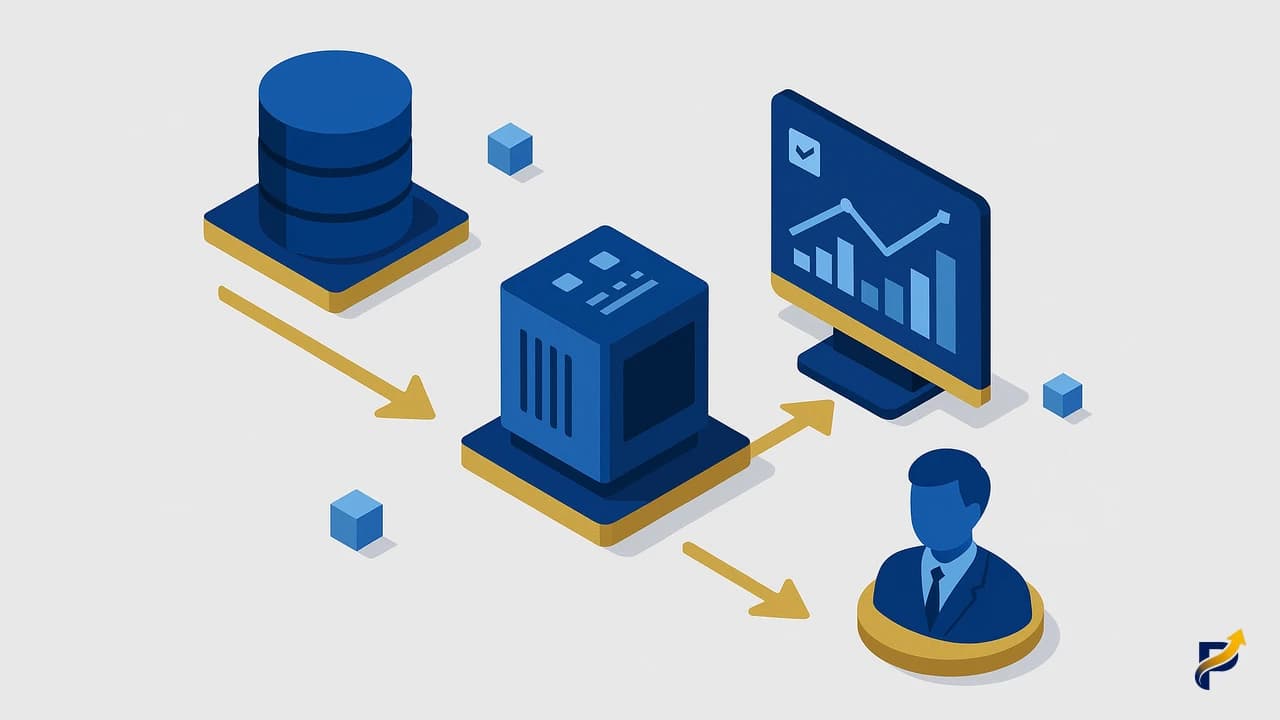
The €2.3 Billion Problem Dutch Manufacturers Can No Longer Ignore
Let's be direct about the scale of this issue. According to industry research published in 2025, the Netherlands manufacturing sector loses an estimated €2.3 billion annually due to inefficient data analytics. That's not a rounding error. That's the cost of decisions made too slowly, production lines that stop unexpectedly, and supply chains that break down without warning.
For a long time, manufacturers assumed that fixing this required enterprise-grade software costing hundreds of thousands of euros and a dedicated IT department to maintain it. That assumption kept smaller companies stuck. If you're running a precision components firm in Eindhoven with 80 employees, or a food processing company in Zeeland with a team of 150, the idea of deploying Oracle Analytics or SAP BusinessObjects felt completely out of reach — financially and operationally.
Power BI (Microsoft's business intelligence platform that turns raw data into visual dashboards and reports) changed that calculation entirely. It's not a stripped-down tool for small businesses. It's the same platform used by global manufacturers, just licensed at a price point that fits a 50-person operation.
We've worked with growing Dutch manufacturers who spent months agonising over Excel dashboards that took three days to compile — only to be outdated by the time management reviewed them. The first time their team connected Power BI to their production data and saw a live dashboard refresh automatically, the reaction was almost always the same: "Why didn't we do this sooner?"
Part of the answer is timing. The Dutch government's Digital Transformation Initiative (2025–2027) now offers subsidies covering up to 40% of BI software implementation costs for qualifying manufacturers. That removes a significant financial barrier for companies that previously couldn't justify the investment. Combine that with Power BI's licensing cost of approximately €10–15 per user per month — about 34% cheaper than competing platforms — and the economics suddenly make sense even for budget-conscious SMEs.
Why Netherlands manufacturing companies are moving now, rather than waiting, comes down to competitive pressure. The Netherlands ranks 3rd in Europe for Industry 4.0 adoption, and 67% of mid-sized manufacturers plan BI tool investments by the end of 2026, a trend also reflected in Statista's Netherlands business intelligence software market data. If your competitors are getting real-time visibility into their operations and you're still running weekly reports, that gap compounds over time.
How Power BI Compares to Competing BI Platforms for Dutch Manufacturers
Choosing a BI platform isn't just about price. Dutch manufacturers need tools that integrate with existing systems, support compliance reporting for EU and UK markets, and don't require a full-time data scientist to operate. Here's how the leading options compare on the metrics that matter most for Netherlands manufacturing SMEs in 2026. Microsoft was named a Leader in the 2025 Gartner Magic Quadrant for Analytics and BI Platforms, the kind of independent recognition that explains why Power BI is the default shortlist entry for growing manufacturers.
| Platform | Monthly Cost Per User | SAP/Oracle Integration | Setup Time (SME) | Data Literacy Support | Export Compliance Reporting |
|---|---|---|---|---|---|
| Microsoft Power BI | €10–15 | Native connectors | 2–4 weeks | Bundled training included | Yes — EU/UK dashboards |
| Tableau | €42–70 | Third-party middleware | 6–10 weeks | Limited free resources | Partial |
| SAP Analytics Cloud | €35–55 | Native (SAP only) | 8–14 weeks | Vendor-led (extra cost) | Yes — complex setup |
| QlikSense | €30–45 | Custom connectors | 4–8 weeks | Community-based | Partial |
| Looker (Google) | €45–65 | Requires API development | 8–12 weeks | Limited for SMEs | Limited |
Several things stand out from this comparison. First, the cost gap is significant. For a manufacturer with 50 users, choosing Power BI over Tableau saves roughly €19,200 annually — that's real money that can go back into production capacity or workforce development.
Second, integration matters enormously. Around 58% of Dutch manufacturers already use SAP or Oracle as their core ERP system, according to 2025 industry data. Power BI's native connectors for both platforms mean your existing data doesn't need to be migrated or transformed before it becomes useful. With competing tools, that middleware layer adds both cost and delay.
Third, and this is something we see underestimated repeatedly: setup time directly determines ROI speed. A manufacturer that goes live in three weeks starts making better decisions in three weeks. One that's still in implementation twelve weeks later has already missed a season's worth of production optimisation opportunities.
The counter-intuitive observation worth making here? More expensive doesn't mean more capable in this context. Several Dutch manufacturers we've spoken with in 2025 and 2026 trialled SAP Analytics Cloud first — precisely because they trusted a brand they already used — and then moved to Power BI after finding the implementation complexity was far higher than expected for their team size. Familiarity with a vendor doesn't always translate to the right tool for the job.
The Numbers Behind Why Netherlands Manufacturing Companies Are Switching
Statistics only matter if they connect to real operational outcomes. So let's walk through what the data actually means for a manufacturer in practice.
Production downtime reduction is one of the most immediate wins. Manufacturers implementing Power BI's real-time monitoring dashboards report 23–31% reductions in unplanned downtime. For a plant running two shifts, even a 20% reduction in downtime can add weeks of productive output annually. Real-time monitoring means a production manager sees a machine anomaly on their dashboard before it becomes a failure — rather than discovering it when the line stops.
Decision-making speed tells a similar story. SMEs report 40% faster decision cycles after Power BI implementation. That might sound abstract, but consider a concrete example: a Dutch packaging manufacturer we worked with previously needed four days to compile a weekly production efficiency report. After implementing Power BI connected to their SAP system, that report generated automatically every morning. Their operations director estimated she reclaimed roughly six hours per week — time she now spends on supplier negotiations and process improvement rather than data collection.
Supply chain visibility is where the numbers get especially compelling for Dutch companies. The Netherlands sits at the heart of European logistics — Rotterdam is Europe's largest port, and Dutch manufacturers typically manage complex supplier networks across multiple countries. Power BI's predictive analytics have improved supply chain visibility by 56% for companies that have deployed it properly, based on 2025 data. That means fewer stockouts, better inventory positioning, and earlier warning when a supplier is trending toward a delay.
Perhaps the most underappreciated statistic: Power BI saves compliance officers 18+ hours monthly through automated export compliance reporting. For manufacturers exporting to EU and UK markets — which describes the majority of Dutch industrial companies — post-Brexit regulatory requirements created a significant administrative burden. Dashboards that pull customs data, tariff classifications, and shipment records automatically don't just save time. They reduce the risk of costly compliance errors.
Looking ahead to 2027, we expect the next evolution to be predictive maintenance integrated directly into Power BI dashboards via Azure Machine Learning — moving from "what happened" reporting to "what will happen" forecasting. Dutch manufacturers who build their data foundations now will be positioned to layer in those capabilities without starting over.
A Practical Guide to Getting Started Without Overwhelming Your Team
Here's the honest reality: many Power BI implementations fail not because the tool is wrong, but because companies try to do too much at once. They want 47 dashboards connected to six data sources within the first month. That approach burns out your team and produces dashboards nobody trusts because the underlying data hasn't been properly validated.
Start smaller than you think you should.
Pick one operational problem — the most painful one. For most Dutch manufacturers, that's either production efficiency tracking or inventory visibility. Connect Power BI to a single data source, build two or three core dashboards, and let your team live with them for 30 days. Fix the data quality issues that surface. Build trust in the numbers. Then expand.
Data literacy training is not optional — it's the implementation. Around 73% of Netherlands manufacturing decision-makers cite bundled data literacy training as a key factor in selecting Power BI for 2026 deployments. Microsoft's learning platform (free with most Power BI licenses) covers everything from basic dashboard navigation to writing DAX formulas (the calculation language Power BI uses). Even small teams can reach functional proficiency within four to six weeks if they dedicate a few hours weekly.
A few practical considerations worth flagging honestly:
- ▸Power BI works best when your source data is reasonably clean. If your ERP has five years of inconsistent product codes and duplicate entries, a BI tool will surface that mess rather than hide it. Budget time for data cleansing before implementation.
- ▸The mobile app is genuinely good, which matters for production managers who aren't desk-bound.
- ▸Power BI Premium (the higher-tier license) is not necessary for most manufacturers under 500 employees. The standard Pro license handles most real-world use cases.
One PapaSiddhi perspective worth sharing from our work across European manufacturing clients: the companies that see fastest ROI are those who assign a single internal "Power BI champion" — someone with enough operational knowledge to validate whether a dashboard reflects reality, and enough enthusiasm to train their colleagues. This person doesn't need to be a data expert. They need to care about making the tool work.
How PapaSiddhi Can Help
At PapaSiddhi Technologies, we've helped manufacturing businesses across the Netherlands move from disconnected spreadsheets to live, decision-ready dashboards — without the enterprise price tag or the months-long implementation timelines.
Our Power BI and data analytics services cover everything from initial system integration with your existing SAP or Oracle environment to custom dashboard builds tailored to Dutch manufacturing workflows. We also offer IT outsourcing support for companies that want ongoing dashboard maintenance and data management without hiring in-house.
For manufacturers considering ERP modernisation alongside their BI investment, our Business Central implementation services create a clean data foundation that makes Power BI significantly more powerful from day one.
We onboard new clients within 48 hours of project confirmation, and we back every developer placement with a free replacement guarantee — because your project timeline matters. If you're a manufacturer in the Netherlands exploring whether Power BI fits your business, talk to our team for a free consultation. No pressure, no jargon — just a straightforward conversation about what's actually achievable for your operation.
Conclusion
Dutch manufacturers are adopting Power BI in 2026 because the business case has become impossible to ignore. The combination of affordable licensing, deep integration with existing ERP systems, government subsidies, and measurable operational gains — from reduced downtime to faster compliance reporting — makes this a practical investment for companies of almost any size. You don't need a huge budget or a dedicated data team to get started. You need a clear problem to solve, clean enough data to work with, and an implementation partner who understands manufacturing realities rather than just software demos. The companies building these capabilities now will have a meaningful head start as Dutch manufacturing continues to evolve through 2027 and beyond.
Frequently Asked Questions
Common questions about why netherlands manufacturing companies answered by the PapaSiddhi expert team.