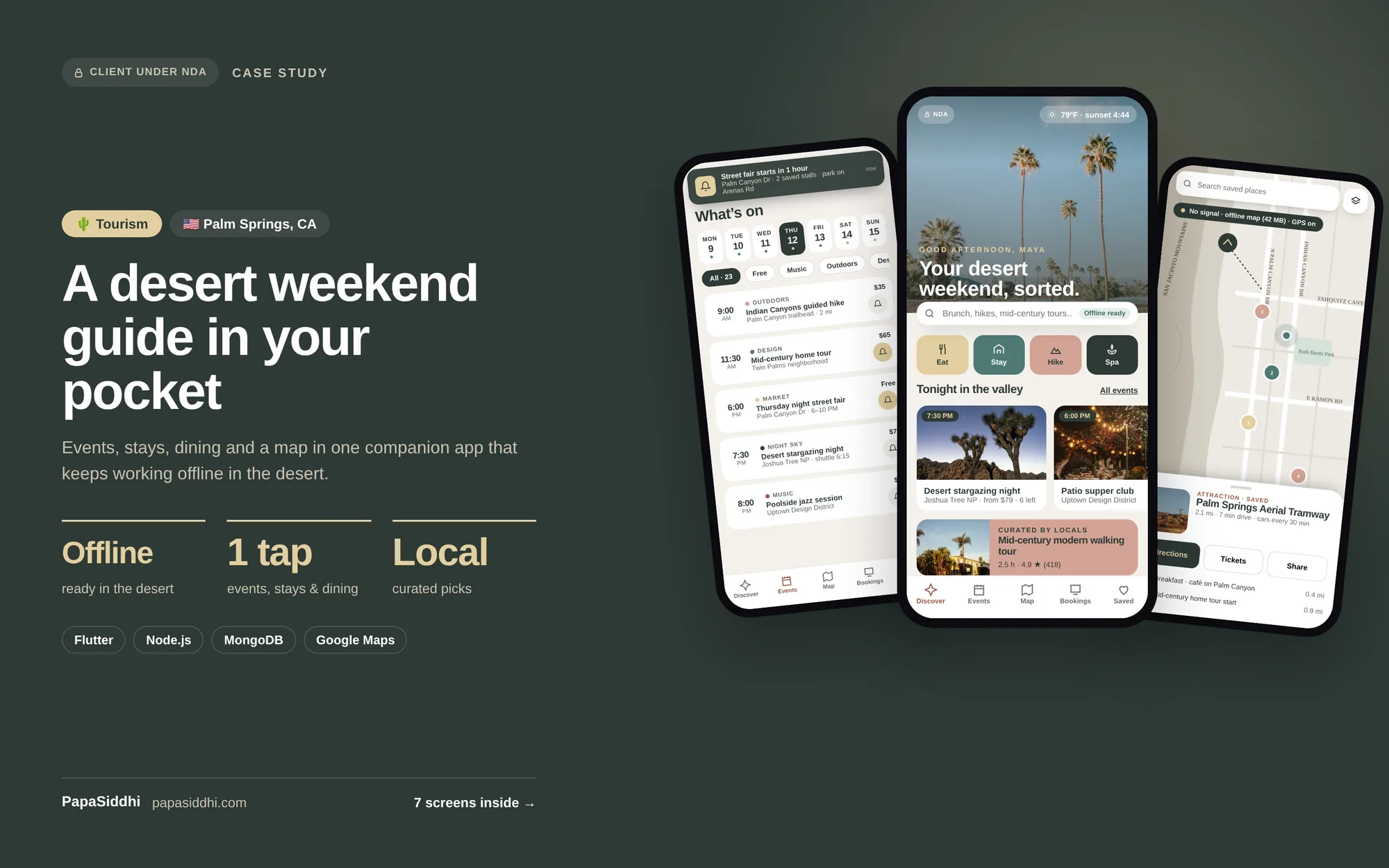
Travel
Tourism Companion Mobile App for Palm Springs, USA
Delivered a 4.
FlutterNode.jsMongoDB
United States·Mobile AppView Study →
A curated digital city guide platform for San Francisco — providing tourists and locals with rich neighbourhood guides, event listings, restaurant recommendations, and hidden gem discoveries.
Achieved strong organic search rankings for high-value San Francisco tourism keywords.
Project Highlights
Scalable Architecture
Built for growth — Content Platform designed to scale
Secure & Compliant
Enterprise-grade security and data protection standards
Measurable ROI
Fragmented tourist info → Authoritative city guide platform
United States Delivery
Delivered for a United States-based Travel client
Tech Stack
Last updated:
Industry
Travel
Sector
City Tourism
Region
United States
Project Type
Content Platform
The client is a San Francisco-focused travel media venture building an independent digital city guide for visitors and residents alike. Its editorial vision was to cover the city neighbourhood by neighbourhood, from the Mission and North Beach to Hayes Valley and the Sunset, highlighting restaurants, attractions, events and lesser-known local favourites.
In a destination as heavily covered as San Francisco, content alone was not enough; the business needed a platform that could organise large volumes of editorial material, keep event information current and personalise discovery. Technology determined whether the guide could earn search visibility, retain readers and generate revenue through featured placements with local businesses.
This project was delivered under a Non-Disclosure Agreement. The client operates in the Travel sector (City Tourism) and is based in United States. More on software development for US clients.
Information about San Francisco was spread across dozens of blogs, review sites, booking platforms and event apps, with uneven quality and much of it out of date. Visitors planning a trip had to stitch together sources themselves and could not easily tell which recommendations were trustworthy or current.
For the client, building an authoritative alternative raised practical problems. Editors needed a structured way to publish and maintain neighbourhood profiles and listings, events changed daily and had to be refreshed without manual re-entry, and the experience had to feel personal rather than a generic directory.
The platform also needed strong technical SEO and fast performance to compete for high-value tourism searches dominated by established travel brands.
Fragmented tourist info
Authoritative city guide platform
PapaSiddhi Technologies developed the city guide on Next.js for fast, search-friendly rendering, backed by Node.js services and MongoDB, whose flexible document model suits varied content types such as neighbourhoods, venues, articles and events. An editorial content management workflow lets the team draft, review and publish structured neighbourhood and district guides alongside curated restaurant and attraction listings.
Real-time event aggregation pulls listings from the Eventbrite API, while the Yelp API enriches venue profiles with up-to-date business details. Google Maps powers interactive maps with custom POI markers, letting users explore each district visually.
A personalised recommendation engine suggests experiences based on a user's stated interests and browsing behaviour, and an itinerary builder allows visitors to save places into a trip plan and share it with travel companions. Consumer data handling was designed with CCPA expectations in mind for Californian users.
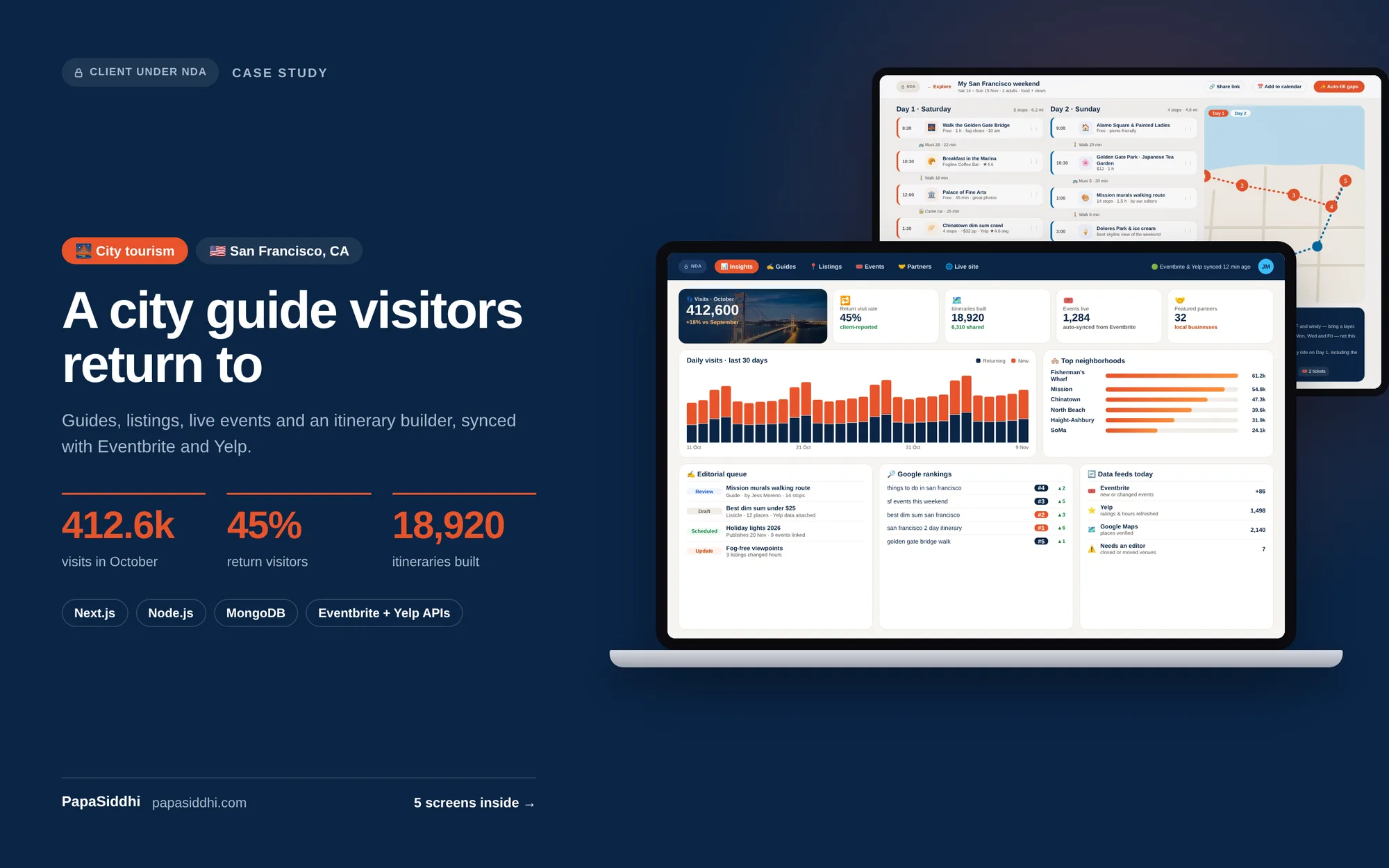
Achieved strong organic search rankings for high-value San Francisco tourism keywords. Built a loyal returning user base with 45% return visit rate and partnerships with 30+ local businesses for featured listings.
Transformation Summary
Fragmented tourist info → Authoritative city guide platform
This project was delivered under a Non-Disclosure Agreement (NDA). Specific client details, business data, proprietary workflows, and project credentials remain confidential. Screenshots and live URLs are available upon mutual NDA execution.
Request an NDA to see full detailsThe platform includes an editorial content management layer so your team publishes without developer involvement, and event data is aggregated automatically rather than entered by hand. You should still plan for a consistent editorial effort — the 45% return visit rate came from content people wanted to come back to, not from the platform alone.
Recommendations are driven by stated and inferred interests within the session and by content relationships, rather than by building extensive cross-site profiles. That keeps it useful while avoiding the consent complexity that heavy behavioural tracking creates, particularly for visitors arriving from stricter privacy jurisdictions.
Aggregated third-party data is a real dependency and worth being honest about — APIs change terms and rate limits. We isolate each integration behind its own layer so a provider change is a contained fix, and we cache aggregated content so the site stays useful if a feed is temporarily unavailable.
This one built partnerships with 30+ local businesses for featured listings, which is the most durable model for a city guide — local businesses pay for qualified local visibility. Display advertising works at higher traffic volumes but generally yields less per visitor than direct partner relationships.
City tourism keywords are genuinely competitive because established travel publishers hold them, so expect a longer horizon than a local service business — six to twelve months for meaningful traction on high-value terms. Neighbourhood-level and long-tail content ranks much faster and builds the authority that supports the harder terms.
Let's discuss your project and create a success story together.
Travel
Delivered a 4.
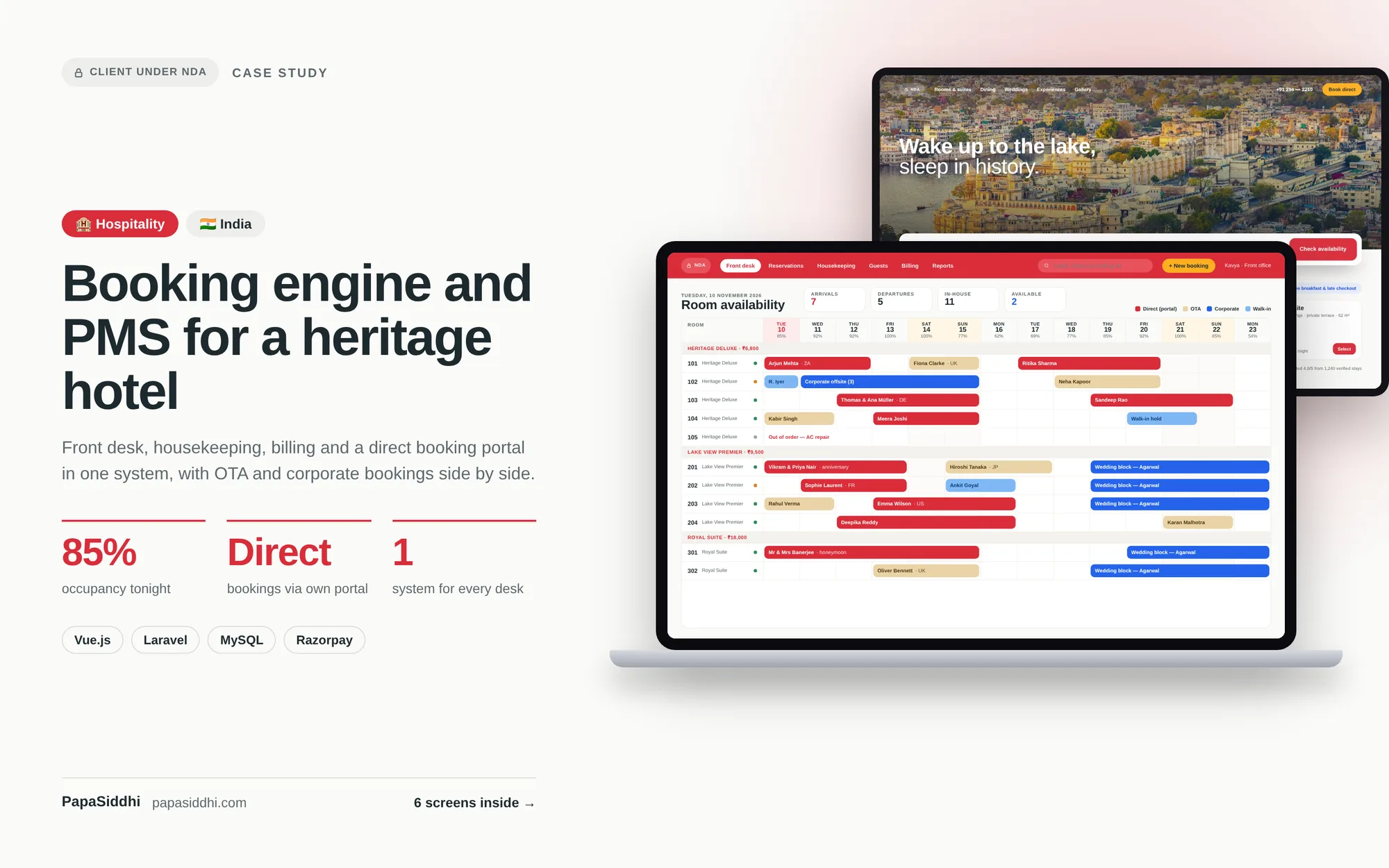
Hospitality
Eliminated double-bookings entirely, reduced billing errors by 95%, and cut administrative time by 50%.
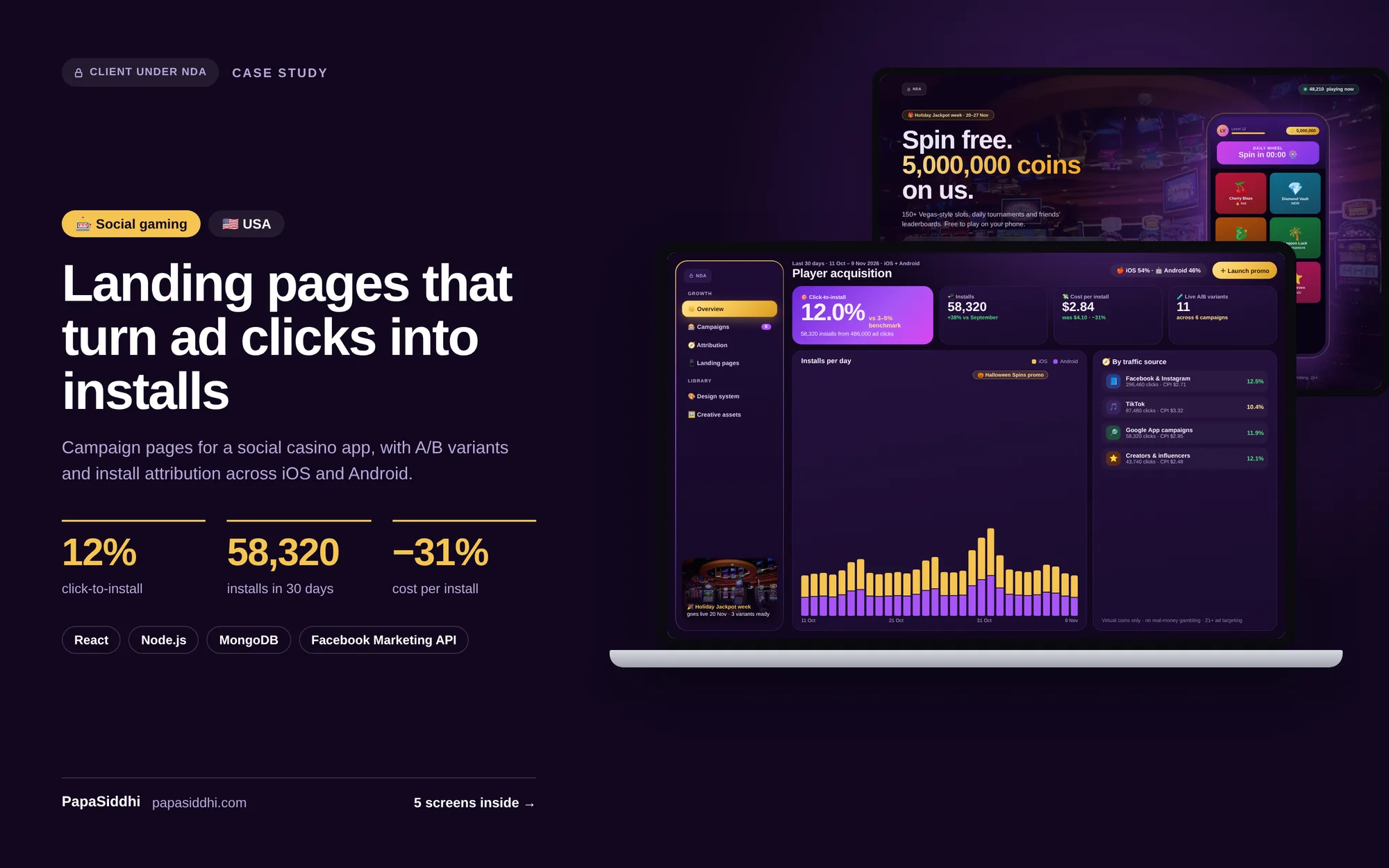
Gaming
Achieved 12% click-to-install conversion rate (industry benchmark: 3-5%).