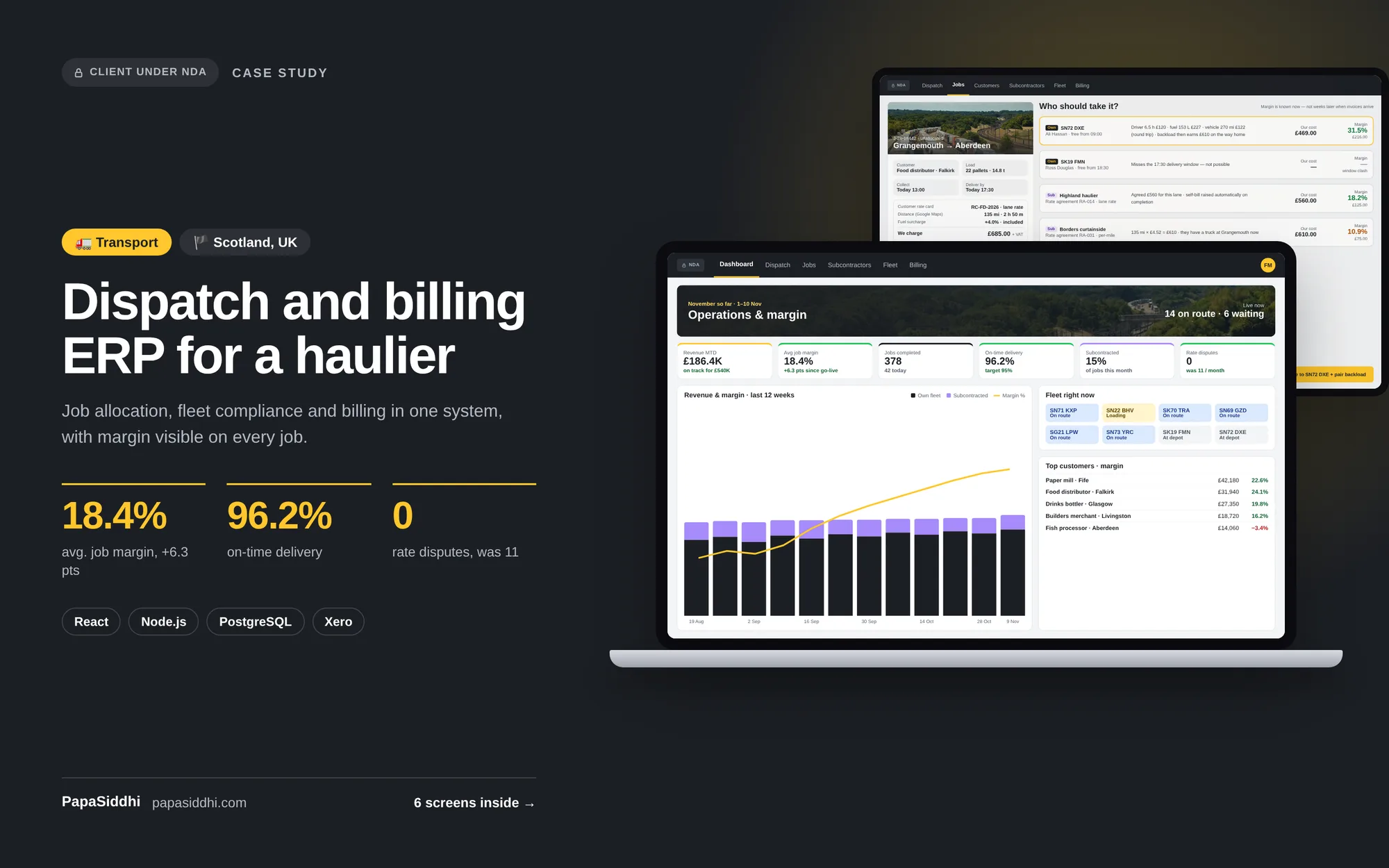
Transport
Transport Operations & Dispatch ERP for Sev*** Transport, Scotland
Delivered in approximately five months with a small dedicated team.
ReactNode.jsPostgreSQL
United Kingdom (Scotland)·Dedicated TeamView Study →
A London-based logistics and transportation provider, running a fleet across the UK for retail and industrial clients, needed to modernise how it managed jobs, tracked deliveries, and billed customers. Its operations relied on a transport management system (TMS) that held job and route data, but finance ran separately, so invoicing was slow and error-prone.
The billing cycle collapsed from up to five working days to same-day: completed jobs are now priced and pushed into Business Central as draft invoices automatically.
Project Highlights
Scalable Architecture
Built for growth — Custom Development & ERP Integration designed to scale
Secure & Compliant
Enterprise-grade security and data protection standards
Measurable ROI
5-day manual billing cycle → Same-day automated invoicing
United Kingdom Delivery
Delivered for a United Kingdom-based Transport & Supply Chain client
Tech Stack
Last updated:
Industry
Transport & Supply Chain
Sector
Logistics & Transportation
Region
United Kingdom
Project Type
Custom Development & ERP Integration
The client is a London-based logistics and transportation provider running a fleet across the United Kingdom for retail and industrial customers. Its work involves high volumes of collections and deliveries, each priced against client-specific rate cards and often subject to fuel surcharges, waiting time and other accessorial charges agreed contract by contract.
In UK road haulage, margins are tight and cash flow depends on invoicing promptly and accurately. The provider's job and route data lived in an established transport management system, while finance ran separately in Microsoft Business Central. Leadership wanted to keep the TMS that dispatch relied on, but connect operations to finance so completed work turned into correct invoices quickly and route profitability became visible.
This project was delivered under a Non-Disclosure Agreement. The client operates in the Transport & Supply Chain sector (Logistics & Transportation) and is based in United Kingdom. More on software development for UK clients.
Billing was the biggest pain point. Consolidating completed jobs, rates, surcharges and proof-of-delivery into invoices took up to five working days, delaying cash collection and generating frequent disputes from customers querying charges. Admin staff manually reconciled job data in the TMS with rates and customer accounts held in finance, a slow process that regularly introduced errors.
Operationally, dispatchers had no single dashboard showing live job status, and reporting on route or client profitability was effectively impossible. The solution had to fit around the existing TMS rather than replace it, integrate cleanly with Business Central, and apply complex client-specific rate cards and accessorial charges automatically. As a UK business, the provider also needed customer and driver data handled with UK GDPR in mind.
5-day manual billing cycle
Same-day automated invoicing
PapaSiddhi built a custom operations platform using React and Next.js with a Node.js backend and PostgreSQL database, giving dispatch and admin teams one interface for jobs, rate cards and billing. A TMS integration pulls live job and proof-of-delivery data, so the platform always reflects what has actually been completed on the road.
Client-specific rate cards, fuel surcharges and accessorial charges are modelled in the platform and applied automatically to each completed job. A Business Central AL extension, supported by an OData and REST integration layer, pushes priced jobs into Business Central as draft invoices, giving finance a clean, reviewable invoice queue. Dispatchers gained a real-time job-status dashboard, and route and client profitability reporting draws on the combined operational and financial data.
Existing customer and rate data were migrated, and parallel billing was run to validate accuracy against historical invoices before cutover. Training and post-launch support helped dispatch, admin and finance teams adopt the new workflow. Because the platform sits alongside the TMS rather than replacing it, drivers and dispatchers kept familiar tools, minimising disruption to day-to-day operations across the fleet.
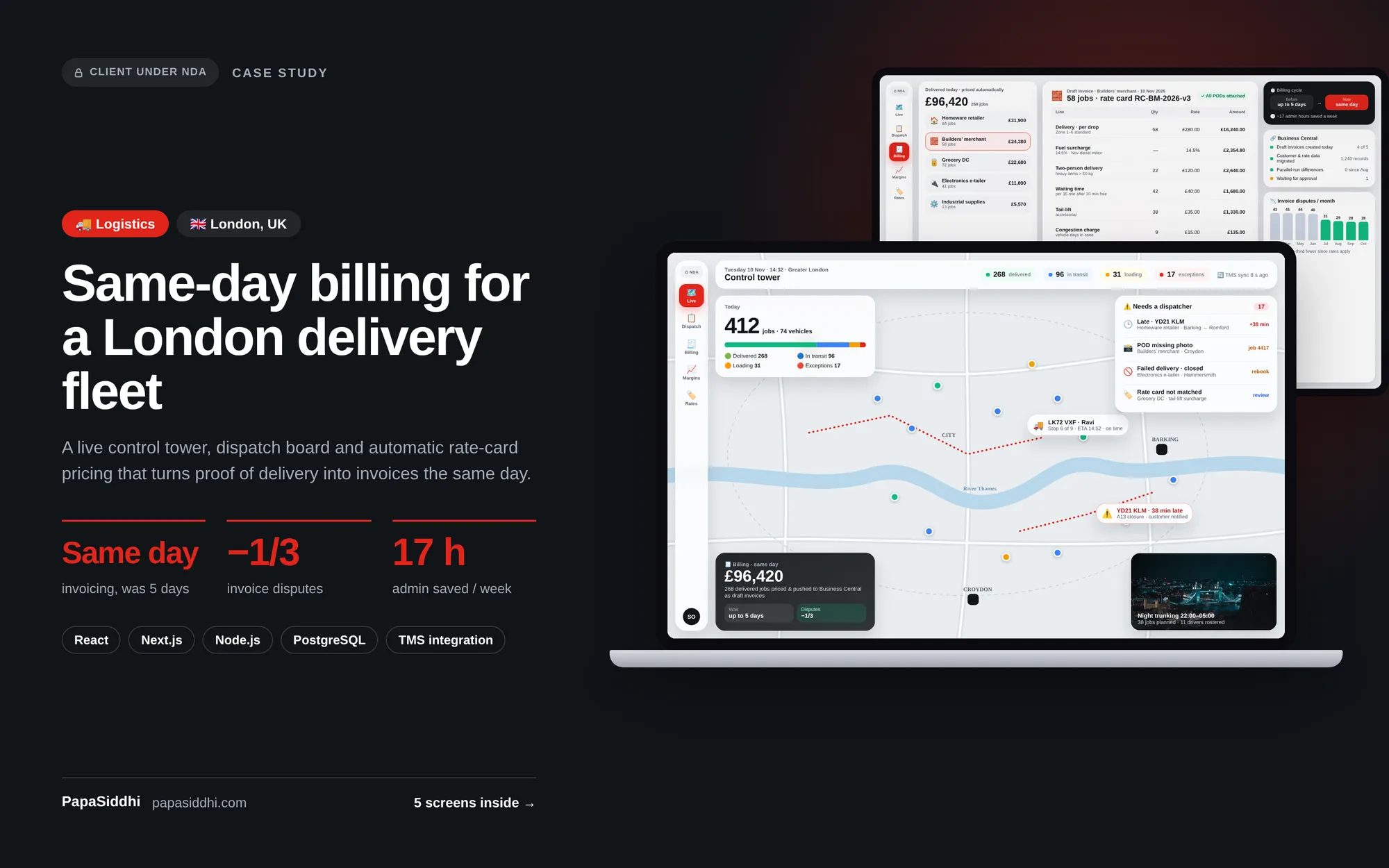
The billing cycle collapsed from up to five working days to same-day: completed jobs are now priced and pushed into Business Central as draft invoices automatically. Invoice disputes fell by roughly a third as pricing became consistent and backed by proof-of-delivery. Admin staff saved an estimated 15 to 20 hours a week previously spent reconciling the TMS and finance, and cash collection accelerated as invoices went out promptly. Dispatchers gained real-time visibility of every job, and management could finally analyse route and client profitability from a single source.
Transformation Summary
5-day manual billing cycle → Same-day automated invoicing
This project was delivered under a Non-Disclosure Agreement (NDA). Specific client details, business data, proprietary workflows, and project credentials remain confidential. Screenshots and live URLs are available upon mutual NDA execution.
Request an NDA to see full detailsThat was the explicit requirement here and it is usually the right call — replacing a working TMS is expensive and disruptive when the actual problem is elsewhere. We built the platform to pull live job and proof-of-delivery data from the existing TMS, so it augments your operational system rather than competing with it.
Job and proof-of-delivery data comes from the TMS, the platform applies the correct rate card and surcharges, and the priced job flows into Business Central as a draft invoice through an AL extension with an OData and REST integration layer. Finance reviews a clean invoice queue rather than reconciling two systems by hand — draft rather than posted, so there is still a human check before it goes out.
Yes, and it was the core of the build rather than an edge case. Client-specific rate cards, fuel surcharges and accessorial charges are modelled in the platform so pricing applies automatically and consistently, which is what cut invoice disputes by roughly a third — the disputes were largely inconsistent manual pricing, not disagreement about the work.
We ran parallel billing against historical invoices to validate accuracy before cutover, which we would insist on for any billing automation. If the system cannot reproduce invoices you already know are right, it is not ready — that validation step is what makes a same-day billing cycle safe rather than reckless.
Almost entirely from eliminating manual reconciliation between the TMS and finance, which was previously a person reading two systems and typing the result into a third. Cash collection accelerated as a side effect, because the billing cycle collapsed from up to five working days to same-day rather than because anyone chased harder.
Let's discuss your project and create a success story together.
Transport
Delivered in approximately five months with a small dedicated team.
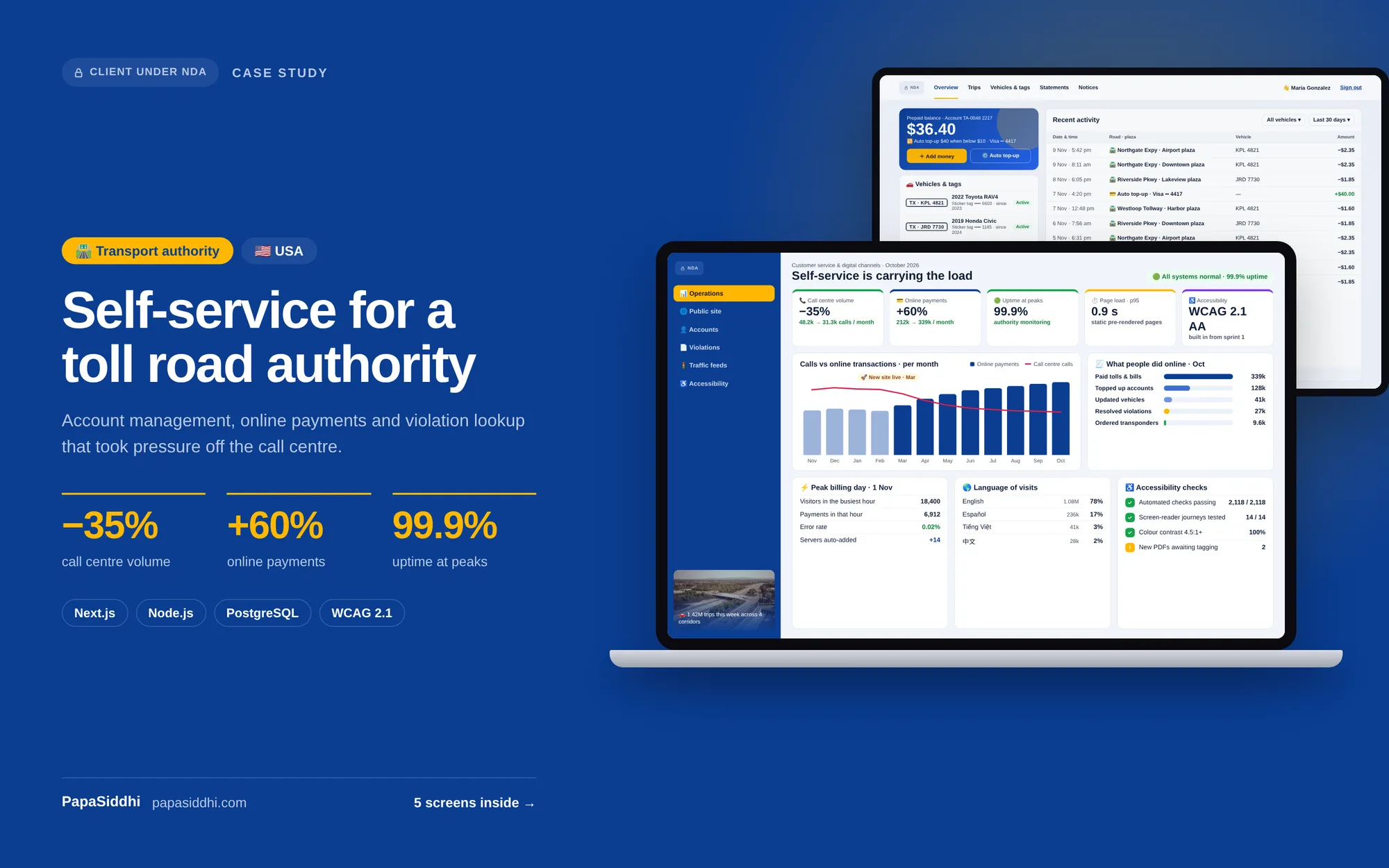
Transport
Reduced call center volume by 35% as users self-served online.
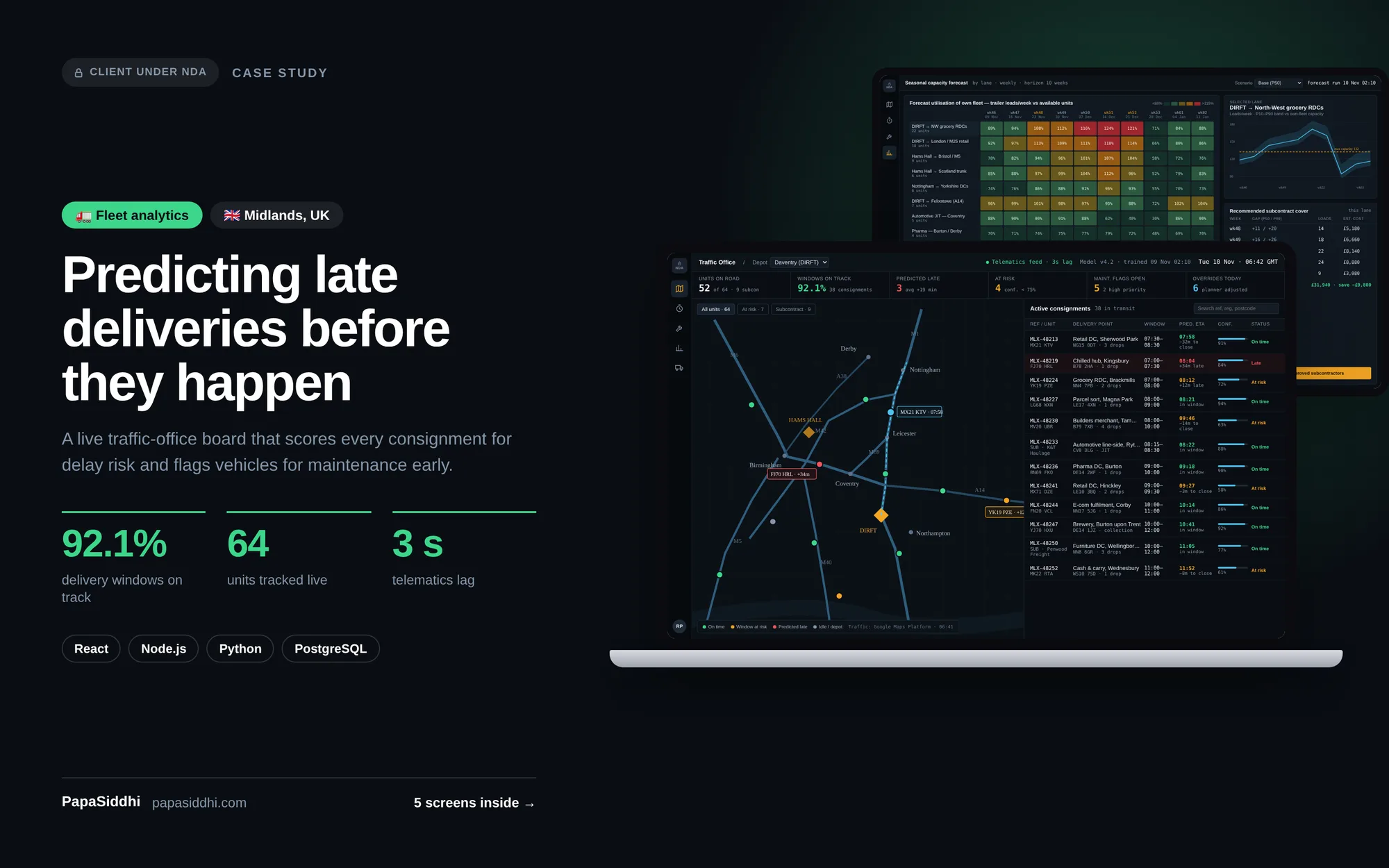
Logistics
Delivered in approximately four months with a small dedicated team.