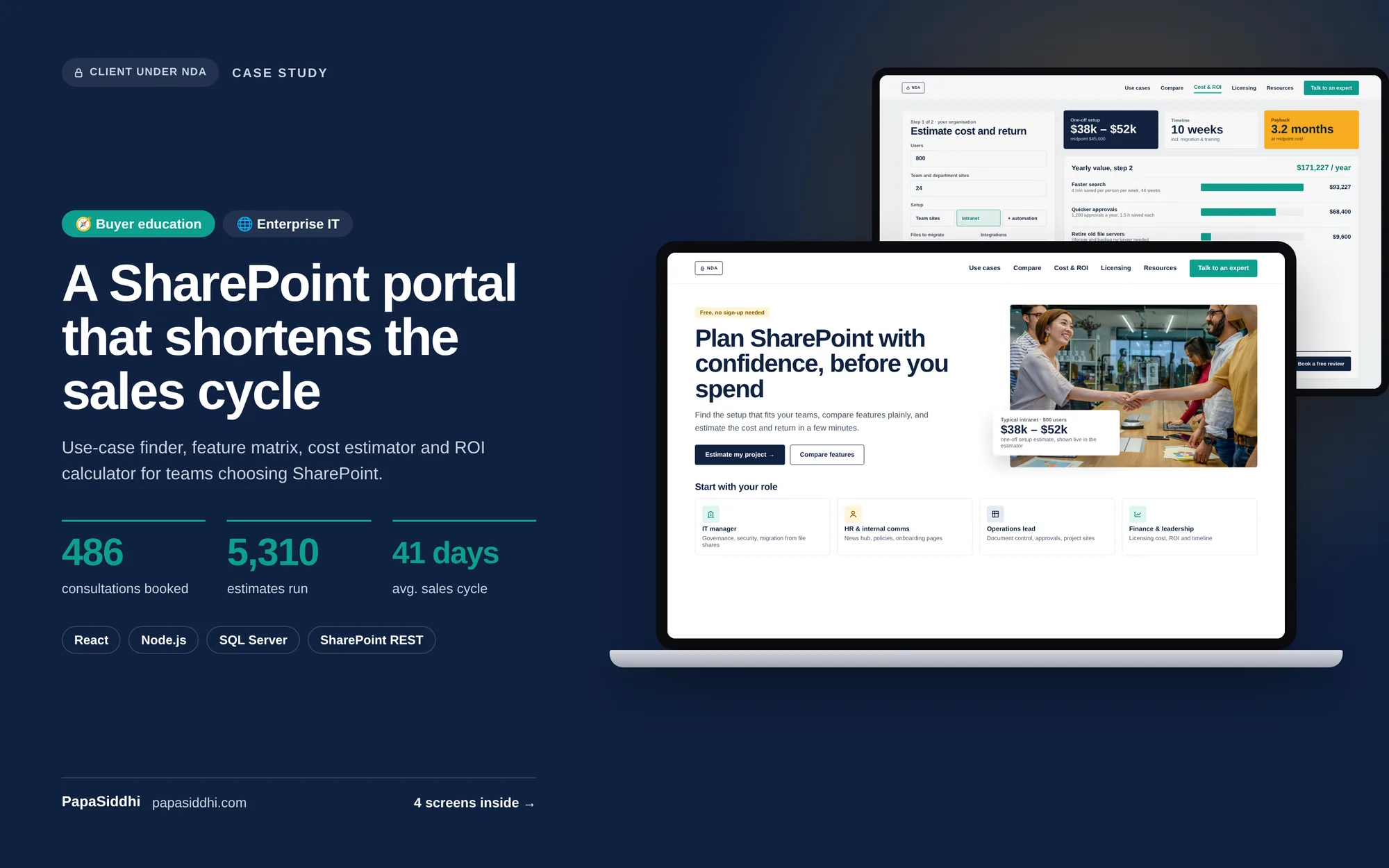
Enterprise
SharePoint Intranet Resource Portal for Enterprise IT Teams
Became a trusted reference portal for SharePoint evaluation and adoption.
ReactNode.jsSQL Server
Global·Information PortalView Study →
A comprehensive enterprise toolkit portal designed to accelerate Microsoft 365 adoption within large organizations — providing change management resources, training materials, and readiness assessment tools.
Helped enterprise clients achieve average M365 feature adoption rates of 78% (vs industry average of 45%).
Project Highlights
Scalable Architecture
Built for growth — Enterprise Toolkit Portal designed to scale
Secure & Compliant
Enterprise-grade security and data protection standards
Measurable ROI
Low M365 adoption → Structured adoption acceleration programme
Global Delivery
Delivered for a Global-based Enterprise client
Tech Stack
Last updated:
Industry
Enterprise
Sector
Microsoft 365
Region
Global
Project Type
Enterprise Toolkit Portal
The client works with large, multi-department enterprises that had already licensed and deployed Microsoft 365 but were not seeing the return they expected. Its customers span several regions and business units, each with its own working habits, legacy tooling and appetite for change, which makes a one-size-fits-all rollout plan unworkable for IT and HR leaders alike.
For these organisations, the technology itself was rarely the obstacle. Teams, SharePoint Online, OneDrive and the wider Microsoft 365 suite were switched on, yet staff continued to email attachments and keep files on local drives. The client needed a repeatable, measurable way to turn a licence investment into everyday working practice, and that meant giving change managers proper digital tooling rather than slide decks and ad hoc spreadsheets.
This project was delivered under a Non-Disclosure Agreement. The client operates in the Enterprise sector (Microsoft 365) and is based in Global.
After go-live, utilisation of key Microsoft 365 features stayed stubbornly low. Employees accustomed to file shares, on-premises Exchange habits and older collaboration tools resisted new ways of working, and nobody had a clear picture of which departments were lagging or why. Adoption was being judged on anecdote rather than evidence. Sponsors who had approved the licence spend were starting to ask what they had actually gained.
Change management teams also lacked shared assets. Training content was recreated for every business unit, rollout plans lived in disconnected documents, and champion networks were coordinated through email chains. Without readiness data gathered before a rollout, programmes launched into departments that were not prepared, and IT had no structured way to report progress to sponsors or adjust the plan mid-flight.
Low M365 adoption
Structured adoption acceleration programme
PapaSiddhi built an enterprise adoption toolkit portal with a React front end and a Node.js API layer backed by SQL Server. Integration with the Microsoft Graph API and SharePoint API lets the portal read tenant and usage signals and surface resources where employees already work, so the toolkit sits alongside Microsoft 365 rather than becoming yet another separate system to learn.
At its core are adoption readiness assessment surveys that profile each department before rollout, a customisable training material library that business units can brand and adapt, and department-specific rollout planning templates. Champion programme management tools help coordinators recruit, equip and track internal advocates, while communication campaign templates give change teams ready-made messaging sequences for launch, reinforcement and follow-up.
Adoption progress tracking and reporting dashboards bring the picture together for IT and change management leads, showing where uptake is strong and where intervention is needed. The portal was delivered iteratively, with early modules released to pilot departments so that feedback from real change practitioners shaped the later reporting and champion features. Reusable components meant new departments could be onboarded to the portal quickly as each enterprise extended its programme.
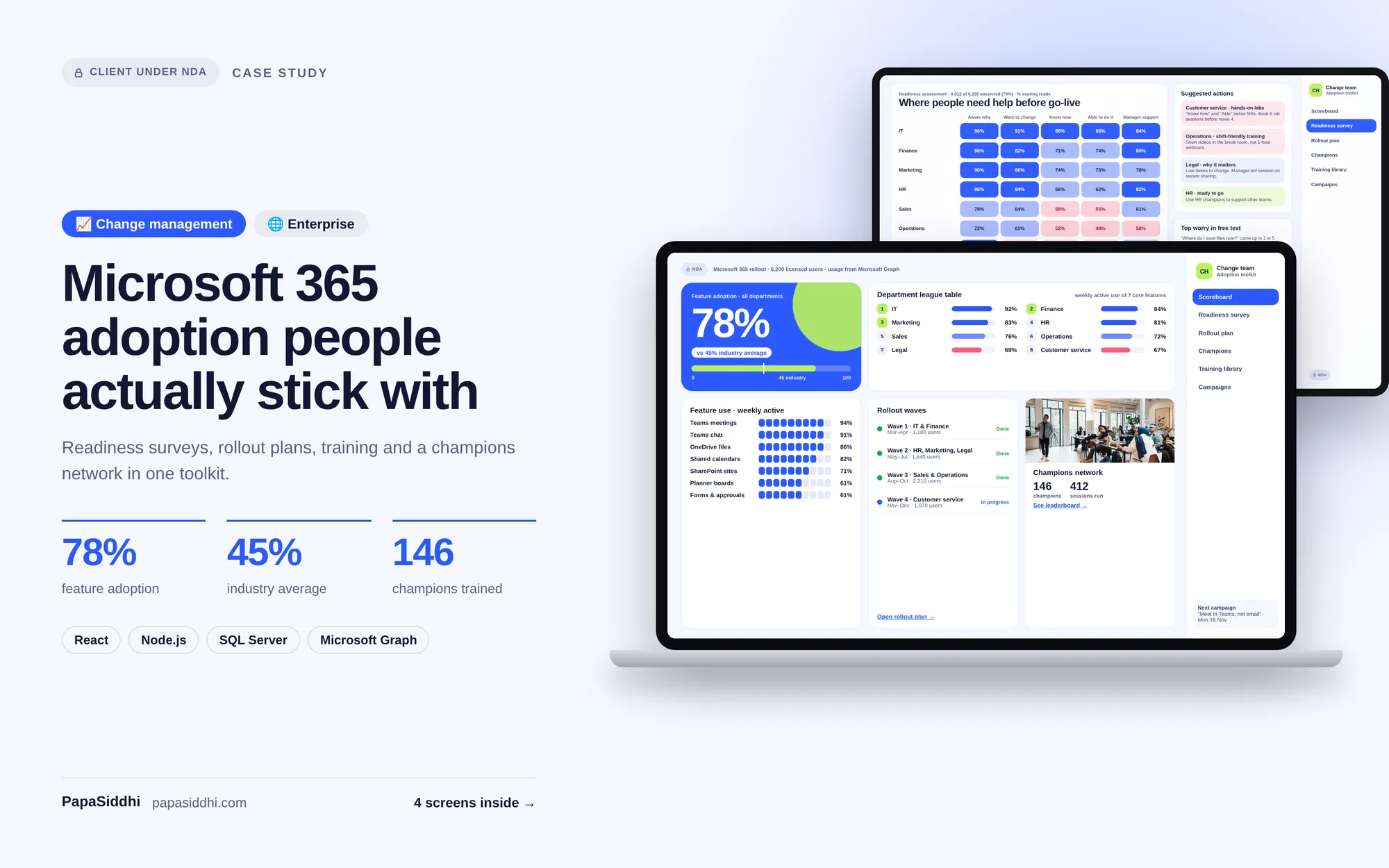
Helped enterprise clients achieve average M365 feature adoption rates of 78% (vs industry average of 45%). Significantly reduced time-to-productivity for new Microsoft 365 deployments.
Transformation Summary
Low M365 adoption → Structured adoption acceleration programme
This project was delivered under a Non-Disclosure Agreement (NDA). Specific client details, business data, proprietary workflows, and project credentials remain confidential. Screenshots and live URLs are available upon mutual NDA execution.
Request an NDA to see full detailsAdoption here means active use of key features, measured through Microsoft Graph usage data rather than licence counts — licences assigned tells you nothing about whether anyone uses Teams or SharePoint. Measuring it honestly is the first thing most organisations are not doing.
Yes — the training materials and rollout guides are department-specific by design, because finance and field operations have genuinely different Microsoft 365 workflows. Generic organisation-wide training is a common reason adoption programmes stall.
It requires Microsoft Graph permissions that your IT team grants and can revoke, scoped to usage reporting rather than content access. We are explicit about which permissions are needed and why, since this is exactly the question a security team should be asking before approving any tool.
The platform build is measured in weeks, but adoption change is measured in quarters — behavioural change in a large enterprise does not follow a deployment schedule. Expect early movement in a pilot department within a couple of months and organisation-wide shifts over two to three quarters.
That is the normal failure mode and no toolkit alone fixes it — resistance is usually rational, because the legacy tool works for them today. The programmes that succeed pair the toolkit with visible leadership use and department champions, and we would rather set that expectation than sell software as a culture fix.
Let's discuss your project and create a success story together.
Enterprise
Became a trusted reference portal for SharePoint evaluation and adoption.
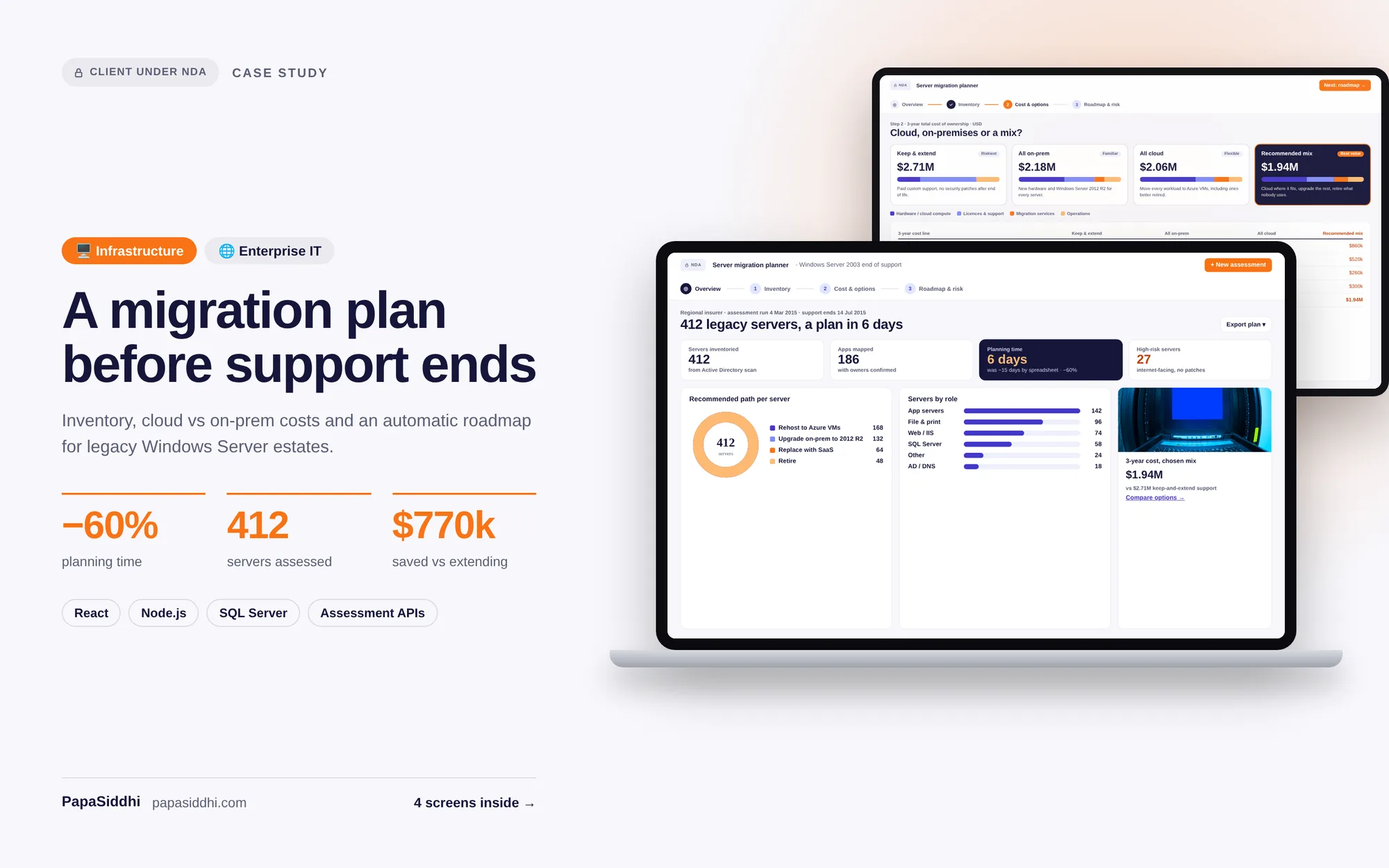
Enterprise
Used by enterprise IT teams across multiple countries to plan and execute successful migrations.
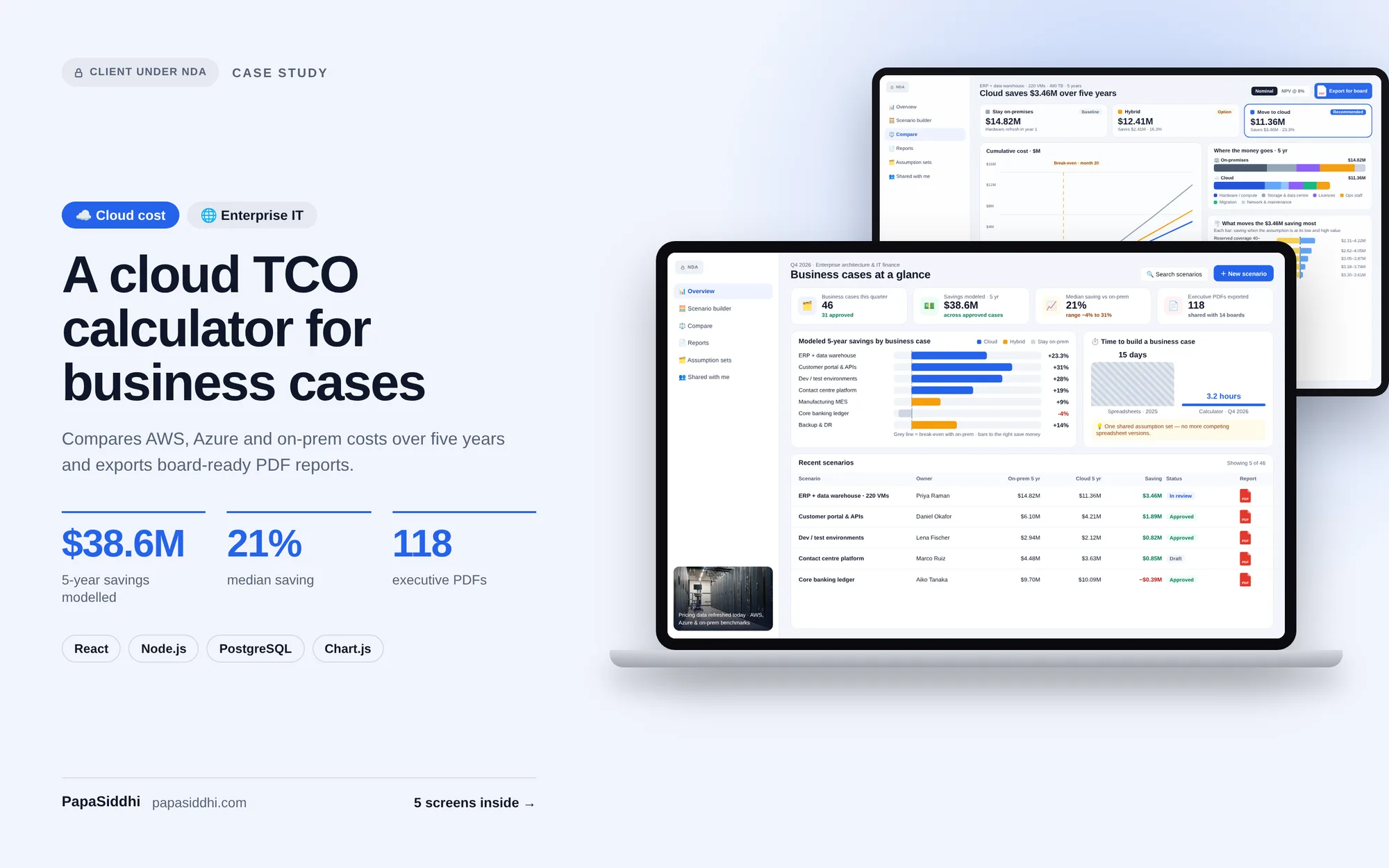
Enterprise
Adopted by enterprise technology teams to support board-level investment decisions.