 USA
USA UK
UK AU
AU UAE
UAE India Dev Centre
For years, digital transformation was framed as a billion-dollar boardroom conversation—something reserved for global enterprises with sprawling IT departments and deep capital reserves. That framing is now dangerously outdated. In 2026, digital transformation for small business is no longer a competitive advantage; it is the baseline expectation of customers, investors, and supply chain partners alike.
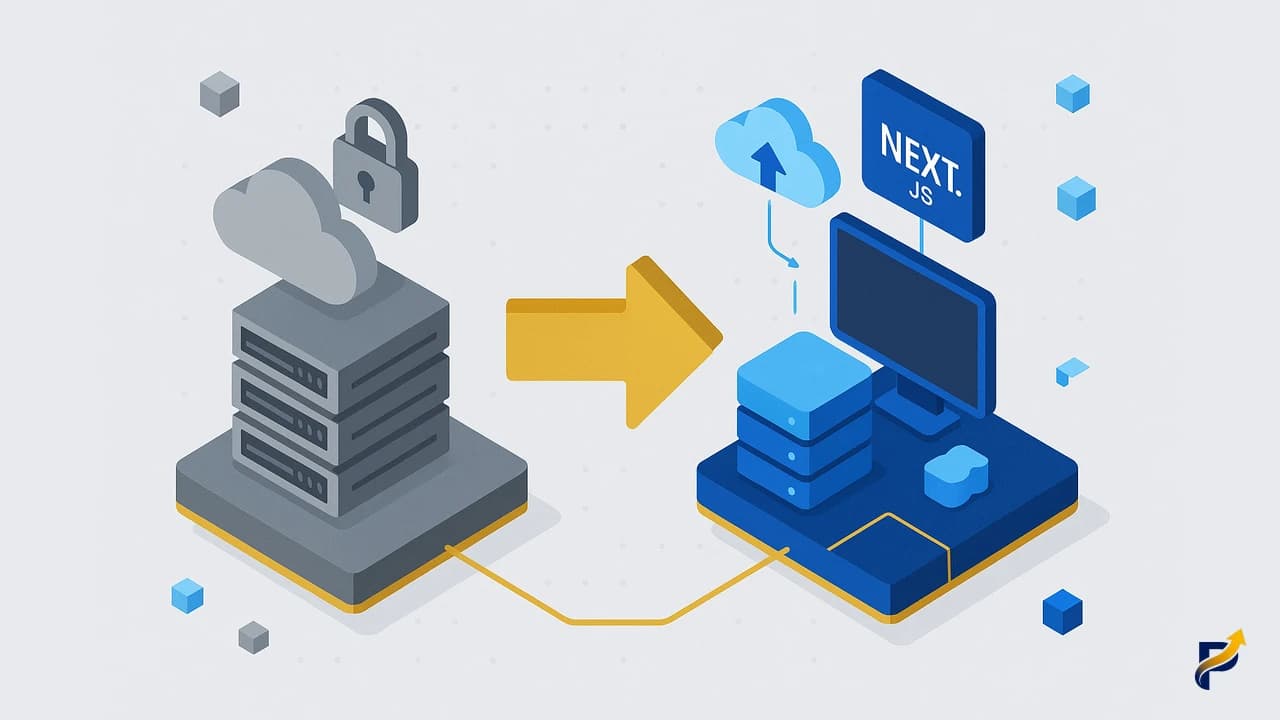
SMEs that fail to modernise are not simply leaving efficiency gains on the table. They are actively ceding market share to leaner, digitally native competitors, many of whom are armed with AI tools, cloud-native ERP systems, and outsourced specialist talent that rivals anything an enterprise IT team could deploy.
This guide is written for senior IT decision-makers—CTOs, IT Directors, and Operations Leaders at growth-stage SMEs across the USA, UK, Netherlands, Denmark, UAE, and Australia—who need a clear, actionable framework rather than another collection of buzzwords.
Why SMEs Cannot Afford to Wait
The pace of digital adoption has compressed dramatically. According to the World Economic Forum's 2025 Future of Jobs Report, 60% of SMEs in developed economies now identify technology adoption as their single most critical growth lever—ahead of access to capital or new market entry.
Yet the gap between aspiration and execution remains wide. Industry research suggests that only around 28% of small and mid-sized businesses describe themselves as having a coherent, funded digital strategy.. The remaining 72% operate in a state of reactive technology adoption—purchasing point solutions, running siloed tools, and accumulating technical debt that compounds with every passing quarter.
For IT decision-makers, this gap represents both a risk and an extraordinary opportunity. SMEs that move decisively now—investing in scalable infrastructure, intelligent automation, and strategic outsourcing partnerships—will define their markets over the next five years. Those that hesitate will find themselves in an increasingly expensive catch-up race.
The Four Pillars of SME Digital Transformation
Successful digital transformation for small business does not happen through a single technology purchase. It requires a coordinated strategy built on four interdependent pillars:
1. Infrastructure Modernisation
Migrating from on-premise, legacy systems to cloud-native or hybrid environments. This reduces capital expenditure, improves scalability, and creates the data backbone that every other digital initiative depends upon.2. Process Intelligence
Using automation, AI-assisted workflows, and integrated platforms to eliminate manual, error-prone processes. This directly reduces operational costs and improves service delivery speed.3. Data-Driven Decision Making
Building real-time dashboards, predictive analytics, and centralised reporting so that leaders make decisions based on evidence rather than instinct.4. Talent and Capability Access
Leveraging outsourced specialist teams, remote developers, and managed service providers to access enterprise-grade capability without enterprise-scale headcount costs.These pillars are not independent workstreams. A cloud migration without process intelligence simply moves inefficiency to a different server. An AI initiative without clean, structured data produces unreliable outputs. The architecture must be coherent.
Cloud Migration: The Non-Negotiable Foundation
Cloud adoption remains the foundational step for any SME digital programme. Microsoft Azure, Amazon Web Services, and Google Cloud have all lowered their entry-level pricing significantly in 2026, making enterprise-grade infrastructure genuinely accessible to businesses with as few as 25 employees.
The strategic case for cloud migration extends well beyond cost. It includes:
- ▸Business continuity and resilience: Automated backup, failover, and disaster recovery that most SMEs could never afford to build on-premise.
- ▸Security at scale: Managed compliance frameworks aligned to GDPR, ISO 27001, SOC 2, and regional data residency requirements across the UK, Netherlands, UAE, and Australia.
- ▸Integration readiness: Cloud-native systems connect seamlessly to modern ERP, CRM, and AI platforms—eliminating the integration nightmares that plague legacy environments.
ERP Modernisation: Your Single Source of Business Truth
For SMEs operating across finance, operations, supply chain, and sales, a modern ERP system is the single most impactful investment available. The era of spreadsheet-driven management and disconnected accounting software must end if a business is serious about scale.
Microsoft Dynamics 365 Business Central has emerged as the dominant ERP choice for SMEs globally in 2026. Its reasons for adoption are compelling:
- ▸Purpose-built for SME scale: Unlike SAP or Oracle, Business Central is designed and priced for businesses with 10–300 users.
- ▸Native Microsoft ecosystem integration: Seamless connection with Microsoft 365, Teams, Power BI, and Azure AI services.
- ▸Localisation breadth: Built-in compliance modules for UK, Netherlands, Denmark, UAE, and Australian regulatory requirements.
- ▸Subscription pricing: Predictable monthly per-user costs rather than large upfront licence fees.
AI and Automation: Where SMEs Are Winning Right Now
The narrative around AI for SMEs has shifted decisively in 2026. Generative AI and intelligent automation are no longer experimental. They are production-grade tools delivering measurable ROI across specific, well-defined use cases.
The SME use cases delivering the clearest returns in 2026–2027 include:
Customer Service Automation
AI-powered chatbots and virtual agents trained on company-specific data are handling 40–70% of first-contact customer queries for SMEs across e-commerce, professional services, and logistics sectors—without degrading customer satisfaction scores.Accounts Payable and Receivable Automation
Intelligent document processing tools extract, validate, and post invoice data with accuracy rates exceeding 97%, reducing AP processing costs by up to 60% compared to manual workflows.Predictive Demand Forecasting
For product-based SMEs, AI-driven forecasting models trained on sales history, seasonality, and external market signals dramatically reduce overstock and stockout incidents.Sales and Marketing Personalisation
Generative AI tools produce personalised outreach content, email sequences, and proposal drafts at scale—allowing small sales teams to operate with the output velocity of teams three times their size.The critical success factor in all of these applications is data quality. AI systems are only as reliable as the data fed into them. This is why cloud migration and ERP modernisation must precede or accompany AI initiatives rather than follow them.
PapaSiddhi's AI and ML development team specialises in designing custom AI solutions calibrated to SME data environments—not enterprise-scale data warehouses—making intelligent automation genuinely accessible from day one.
Building Your Digital Workforce Without Breaking the Budget
One of the most persistent barriers to digital transformation for small business is talent. The global shortage of qualified cloud architects, ERP consultants, AI engineers, and DevOps specialists has not eased in 2026. Hiring these roles full-time in the USA, UK, Netherlands, or Australia represents an annual investment of £80,000–£160,000 per specialist—cost structures that most SMEs cannot sustain across an entire transformation programme.
This is where strategic IT outsourcing changes the equation entirely. Rather than hiring to own capability, SMEs can access it through structured outsourcing partnerships that provide:
- ▸On-demand specialist talent aligned to specific project phases
- ▸Managed service delivery with defined SLAs and quality accountability
- ▸Cost structures 40–65% below equivalent in-market hiring costs
- ▸Scalability to ramp up or down as project requirements evolve
For businesses that prefer a direct engagement model, our hire developers offering allows you to embed individual specialists or small teams directly into your existing workflows, operating under your management but without the recruitment, HR, and infrastructure overhead.
Common Pitfalls That Derail SME Digital Initiatives
Understanding where digital programmes fail is as strategically valuable as knowing where they succeed. The most common failure modes observed across SME engagements in 2026 include:
1. Technology-first thinking without a process foundation
Purchasing a new platform before mapping existing processes ensures you will automate your inefficiencies rather than eliminate them. Always conduct a process audit before selecting technology.
2. Underestimating change management
Technology implementations succeed or fail based on user adoption. Programmes that invest heavily in software and minimally in training, communication, and stakeholder engagement consistently underperform.
3. Fragmented vendor relationships
Managing five separate vendors for cloud, ERP, security, AI, and development creates coordination overhead that consumes leadership bandwidth and erodes accountability. A consolidated partner model produces better outcomes.
4. Setting ROI expectations that are too long-term
Digital investments must show early wins within 90–120 days to maintain executive and board confidence. Structure programmes to deliver measurable quick wins alongside longer-horizon strategic objectives.
5. Ignoring cybersecurity in the modernisation roadmap
Every new cloud workload, integration, and AI system expands the attack surface. Security architecture must be embedded in the transformation programme, not retrofitted after deployment.
Building a Pragmatic SME Digital Roadmap
A credible digital roadmap for an SME in 2026–2027 typically follows a three-horizon structure:
Horizon 1: Stabilise (Months 1–6)
- ▸Audit current technology landscape and identify critical technical debt
- ▸Complete cloud migration or rationalise existing hybrid environment
- ▸Implement or upgrade core ERP and financial management systems
- ▸Establish baseline cybersecurity posture
Horizon 2: Optimise (Months 6–18)
- ▸Deploy process automation across highest-volume manual workflows
- ▸Integrate AI-assisted tools into customer service, sales, and finance functions
- ▸Build real-time reporting and management dashboards
- ▸Establish data governance frameworks
Horizon 3: Innovate (Months 18–36)
- ▸Develop proprietary AI models trained on business-specific data
- ▸Explore platform and ecosystem plays that create new revenue streams
- ▸Scale successful automation patterns across additional functions
- ▸Build continuous improvement cycles driven by operational data
How PapaSiddhi Can Help
PapaSiddhi Technologies is an IT outsourcing partner purpose-built for SMEs navigating complex digital transformation programmes. With delivery capabilities across the USA, UK, Netherlands, Denmark, UAE, and Australia, we combine senior technical expertise with a deep understanding of the operational realities facing growth-stage businesses.
Our engagement model is deliberately flexible:
- ▸Microsoft Business Central Implementation: End-to-end ERP deployment, migration from legacy systems, customisation, and post-go-live managed support. Explore our Business Central services →
- ▸IT Outsourcing and Managed Services: Structured outsourcing partnerships that give you access to cloud architects, DevOps engineers, security specialists, and integration experts under defined SLAs. Learn about our IT outsourcing model →
- ▸AI and ML Development: Custom artificial intelligence solutions—from intelligent document processing to predictive analytics to generative AI applications—designed for SME-scale data environments. See our AI capabilities →
- ▸Dedicated Developer Hire: Embed individual senior developers or specialist teams directly into your organisation. Hire dedicated developers →
Ready to build a transformation roadmap that delivers real results? Contact our team today →
Frequently Asked Questions
Common questions about digital transformation small business answered by the PapaSiddhi expert team.